Stucco Repair Cost in the Hill Country
Typical national price ranges for the stucco problems Hill Country homes run into, plus the local factors that move a job up or down.

The short version
National cost guides put most stucco repair jobs between about $600 and $3,000, with the average job landing somewhere around $1,300 to $1,700. A single small patch often falls in the $200 to $600 range. Water damage that has reached the lath behind the stucco is priced by the square foot and can climb well past the typical range. A full restucco is usually figured at about $7 to $12 per square foot installed, plus the cost of tearing off the old material.
These are typical national ranges, not our prices and not Hill Country pricing data. Your wall, your finish and what turns up once the damage is opened all shape the real number. Use this page to plan, then get a written estimate for your actual house.

Typical stucco repair costs by type of job
The ranges below are blended from several national cost guides. We have not found published stucco pricing specific to New Braunfels or the Hill Country, so treat these as a starting point rather than a quote.
Prices reviewed October 2026
| Job type | Typical national range | What it usually covers |
|---|---|---|
| Small patch | $200 to $600 per patch | A few square feet. Small jobs tend to carry a minimum for setup, mixing and finish work. |
| Hairline crack repair | $8 to $20 per sq ft, often a $200 to $600 minimum | Cleaning, filling and refinishing fine cracks so they blend with the wall. |
| Larger crack repair | $8 to $30 per sq ft | Wider or stair step cracks that need cutting out, mesh and rebuilt coats. |
| Holes and impact damage | $250 to $450 per hole | Hail strikes, a stray baseball, a trailer hitch, a mower throwing a rock. |
| Water damage with lath replacement | $30 to $50 per sq ft, up to about $120 per sq ft in severe cases | Removing wet stucco, replacing paper and lath, rebuilding the coats. Framing or mold work is separate. |
| EIFS repair | $30 to $50 per sq ft, about $300 to $500 for a 10 sq ft area | Synthetic stucco over foam board, repaired with materials made for that system. |
| Recoat or color coat | $4 to $5 per sq ft (some guides range from $1.50 to $8) | A new finish coat to even out color and hide a patchwork of old repairs. |
| Elastomeric coating | $1.50 to $5 per sq ft, about $3,000 to $8,500 for a 2,000 sq ft exterior | A thick, flexible coating that can bridge hairline cracks and help shed water. |
| Full restucco | $7 to $12 per sq ft installed, plus $1 to $3 per sq ft for removal | Starting over when damage is widespread or the system behind the stucco has failed. |
| Chimney stucco repair | $8 to $120 per sq ft | A very wide spread between guides. Roof access, height and a small work area all add cost. |
For more on a specific problem, see stucco crack repair, stucco water damage repair, EIFS repair and general stucco repair.
How per square foot pricing really works
Cost guides often seem to disagree because three kinds of per square foot pricing get mixed together.
- Repair pricing by job type. Cracks sit at the low end, around $8 to $20 or $8 to $30 per square foot. Water damage and EIFS sit higher, around $30 to $50.
- Very small, localized repairs. Some guides quote $60 to $120 per square foot for these. It looks wild, but it makes sense. Mixing material, matching texture, setting up and cleaning up take about the same effort whether the patch is 4 square feet or 40. On a tiny patch, those fixed costs get divided by very few feet.
- New stucco or full restucco. About $7 to $12 per square foot installed. The crew works across whole walls, so setup costs spread thin.
The pattern to remember: the bigger the area, the lower the cost per foot tends to run, even though the total bill goes up.
What pushes a Hill Country stucco job up or down
Two cracks that look alike in a photo can lead to very different estimates. These are the factors that matter most on homes in this region. High end custom homes, two story walls, stone transitions and difficult access all tend to push a job toward the upper end of the national ranges.
Stone to stucco transitions
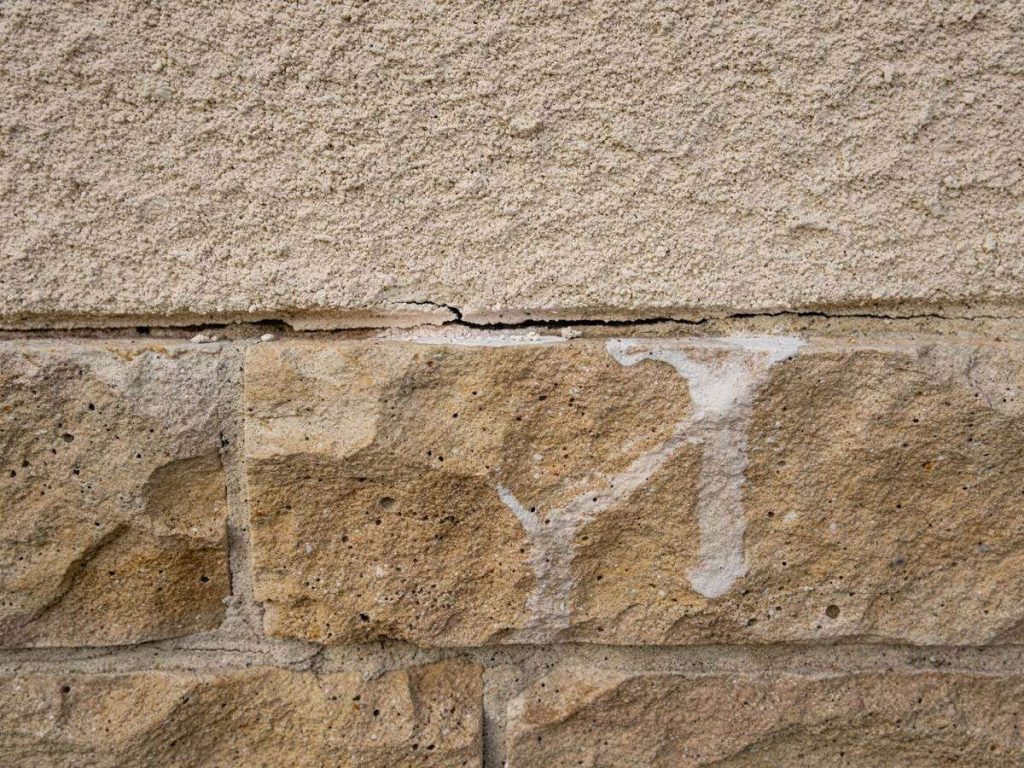
Many homes here pair limestone or cultured stone with stucco. The joint where the two meet is a frequent source of cracks and leaks, and repairing it well is slower, more detailed work than patching an open wall. It can mean cutting back stucco along the stone, correcting how water drains off the ledge, resetting a stop at the joint and refinishing a narrow strip that has to blend on both edges, so it usually prices higher per foot than a field patch.
Two story and custom home walls
Upper walls, entry towers and gables mean ladders, scaffolding or lifts, and custom homes add corners, arches, columns and trim that take hand work. A crack high on a front elevation costs more to reach and finish than the same crack beside the back patio.
HOA color and texture matching
Many local subdivisions have HOAs or architectural review committees that expect repairs to match the approved finish. Matching a weathered color on a small patch is hard, and on a front elevation a slight mismatch can stand out. Sometimes the best answer is recoating a full wall face, which adds square footage. If approval is required, allow time for it.
Hills, slopes and site access
Hillside lots are part of the appeal out here, and they make stucco work harder. A back elevation that sits a full story higher than the front, or a yard of terraces and retaining walls, changes how scaffolding gets set and materials get moved. Difficult access is one of the most common reasons a job lands near the top of a range.
What is hiding behind the wall
This is the biggest unknown. A crack can be only a crack, or the spot where water has slipped in for several rainy seasons. In a region known for heavy, fast rain, stained or soft areas may hide wet paper, rusted lath or damaged sheathing. A good contractor tells you up front how hidden damage will be priced if it turns up.
Repair size and stucco type
More square feet means a bigger total but usually a lower cost per foot. Traditional cement stucco is usually the least expensive system to repair. EIFS costs more because it involves foam board, mesh and its own base coats.
Permits
Small patches generally do not need a permit. Larger jobs, such as a full restucco or work that opens up framing, may. National guides list permit costs for larger projects at roughly $150 to $2,000. Rules vary from one city and county to the next, so check with your local building office before major work begins.
Weather and season
Stucco cures best in mild, dry weather. Peak summer heat and winter cold snaps make work trickier, and spring storms bring a wave of calls at once, so planning ahead of storm season helps.
Repair or restucco?
Most homes need targeted repair, not a whole new stucco system.
Repair usually makes sense when:
- The damage is limited to a few areas.
- The wall behind the stucco is dry and solid.
- Cracks are fine and are not getting wider.
- The rest of the finish is sound.
Restucco may be worth pricing when:
- Damage covers a large share of the walls.
- Repair estimates are getting close to what replacement would cost.
- Water has spread behind the stucco in several places.
- Old patches keep failing faster than they can be fixed.
We explain the cause before we quote. If repair will do the job, we say so. Read more on our stucco installation and restucco page or our guide to restucco cost and repair versus replace.
DIY versus hiring a pro
Some stucco problems are reasonable weekend projects.
| Option | Typical cost | Best for |
|---|---|---|
| Tube of stucco caulk | About $30 | Hairline cracks and small gaps at ground level |
| Stucco patch kit | About $30 to $40 | Small chips and holes |
| Professional repair | About $600 to $3,000 for most jobs (national range) | Water damage, larger cracks, EIFS, stone transitions, upper walls and color matching |
DIY is often fine for a thin, stable crack on an easy to reach wall with no stains or soft spots. Call a pro when:
- You see stains, bubbling paint, soft spots or hollow sounds.
- Cracks keep coming back or keep widening.
- The wall is EIFS, where the wrong patch material can trap water.
- The damage is up high, along a stone transition or on a front elevation where matching matters.
Our DIY stucco repair guide covers the basics if you want to try it yourself.
Ways to keep the cost down
- Fix small cracks early. A sealed crack is inexpensive. A wall of wet lath is not.
- Group your repairs. Several spots fixed in one visit share a single setup.
- Ask about recoating instead of perfect patch matching. On a faded wall, a recoat of the full face can look better and may not cost much more. See stucco painting and coating.
- Manage water. Clean gutters, make sure stone ledges slope away from the wall and aim sprinklers away from stucco.
- Get a written, itemized estimate. It lets you compare bids fairly and see which items are optional.
What a written estimate should spell out
A price scribbled on the back of a card is not enough to compare bids. A solid estimate covers:
- The cause of the damage in plain language.
- Which areas will be repaired and roughly how many square feet.
- The method, layer by layer: removal, paper and lath, base coats and finish.
- Whether the finish will be patch matched or the wall face recoated.
- How stone transitions and hidden damage will be handled and priced.
- Access needs, permits or HOA approval steps.
- Cleanup, payment terms and a rough timeline.
Every estimate we provide is free and in writing.
Will insurance pay for stucco repair?
It depends on your policy and on what caused the damage. This is general information, not insurance or legal advice.
- Often covered: sudden storm damage such as hail or wind driven debris, impact from a vehicle or falling limb, and sometimes water damage from a sudden event like a burst pipe.
- Often excluded: normal wear and sun fading, slow leaks that went on for months, settlement cracks, and mold from long term moisture, depending on the policy.
After a hailstorm, take photos right away and contact your insurer or agent to ask what your policy covers. We can document what we see and provide a written estimate you can share with your adjuster. Our guide on hail damage, stucco and insurance goes into more detail.
Rough cost worksheet
Use this worksheet to build a ballpark budget. Measure the damaged area, choose a rate from the cost table above and multiply, then add any extras that apply.
| Item | Your number | Typical national rate | Your estimate |
|---|---|---|---|
| Damaged area | ______ sq ft | Measure height times width | |
| Repair rate for your job type | ______ per sq ft | Choose from the cost table above | $______ |
| Small job minimum (tiny patches) | About $200 to $600 | $______ | |
| Holes or impact spots | ______ holes | $250 to $450 each | $______ |
| Stone transition length (linear feet, if any) | ______ ft | Price at the higher end of your crack or patch rate | $______ |
| Recoat or elastomeric for a full wall face (optional) | ______ sq ft | $1.50 to $5 per sq ft | $______ |
| Permit for larger work (if required) | About $150 to $2,000 | $______ | |
| Allowance for hidden damage | Leave room if you see stains or soft spots | $______ | |
| Rough total | $______ |
This is a planning tool, not a quote. For a real number on your wall, request a free estimate.
Stucco repair cost FAQ
How much does it cost to fix a crack in stucco?
- National cost guides put crack repair at roughly $8 to $20 per square foot for hairline cracks and up to about $30 for larger ones.
- Small jobs often carry a minimum of a few hundred dollars.
Why do stone and stucco transitions cost more to repair?
The work is slow and detailed. It often means cutting back along the stone, fixing how water drains off the ledge and refinishing a narrow strip that has to blend on both sides.
Does my HOA affect the cost?
It can. If your HOA expects a close match on a visible wall, recoating the full wall face may be the better option, which adds square footage to the job.
Can I get an estimate from photos?
- Yes. Send a wide shot and a close shot of the damage.
- We can often give you an early range from photos, then confirm in person. More answers are on our FAQ page.
More Stucco Guides You’ll Love
Get a real number for your wall
Prefer to talk? Call us and we will set up a time to look at the damage.