Stucco Crack Repair That Starts With the Cause
A crack is the wall telling you something moved. We read the pattern, explain the likely cause, then open, reinforce and refinish the crack so the repair has the best chance to hold.
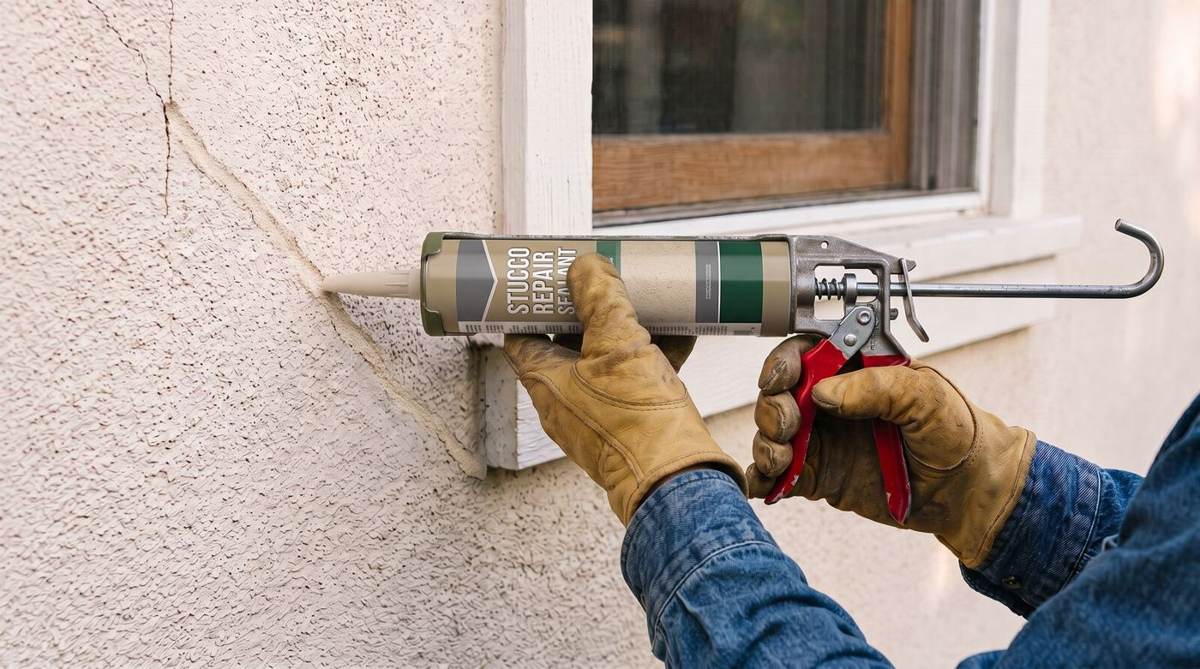
Stucco is rigid. The ground under a Hill Country house is not always so steady. When the two disagree, the wall cracks, and it usually picks the weakest spot it can find: a window corner, a long blank wall, or the seam where stucco meets stone.
Most cracks are cosmetic. A few point to something bigger. Either way, a bead of caulk smeared over the top tends to buy a season at most. Our approach to stucco crack repair is to treat the crack as a clue, figure out what is moving, and then build a repair suited to that movement.
Cracks We Repair
Hairline cracks
Fine lines you can barely fit a fingernail into. Many come from normal shrinkage while the stucco cured. They are mostly cosmetic, but in a wind driven rain they still let some water in.
Spiderweb or map cracking
A net of small cracks spread across a wall, a little like dried mud. This usually traces back to how the stucco was mixed, applied or cured, especially on walls that dried too fast on a hot day. It is rarely structural but can make a house look older than it is.
Stair step cracks
On stucco over concrete block, a crack can zigzag along the mortar joints. That pattern often means the block wall itself shifted, so it deserves a closer look before anyone patches it.
Cracks at windows and doors
Angled cracks that run off the corners of openings are some of the most common cracks on any stucco house. Corners concentrate stress, so settling or seasonal movement shows up there first.
Long straight cracks
Horizontal or vertical lines that follow floor levels, framing or a change in materials. Sometimes they mark a spot where a control joint should have been.
Cracks at stone transitions
Many Hill Country homes mix stucco with limestone or rock veneer. The two materials move differently, so the joint between them is a frequent place for cracks and gaps that let water behind the wall.
Cosmetic Crack or Something Structural?
This is the question most homeowners ask first. The checklist below is a starting point, not a substitute for a professional opinion.
Usually cosmetic:
- Hairline width
- A web pattern spread evenly across a wall
- The crack has not changed in width over several months
- Doors and windows still open and close normally
Worth checking for foundation movement:
- Cracks wider than about a quarter inch, or getting wider
- One side of the crack sitting out farther than the other
- Stair step cracks in a block wall
- Doors or windows that recently started sticking
- New cracks inside in drywall, tile or brick
If we see signs that the house is still moving, we will say so and recommend having a foundation professional or structural engineer look first. Repairing stucco over a foundation that is actively shifting is money spent twice. Once the cause is handled, we can repair the wall.
Homeowner tip: Put a small pencil mark and the date at each end of a crack. Check it again in a month or two. If it has grown past your marks, mention that when you send photos.
Why Stucco Cracks in the Hill Country
Clay soils along the I 35 corridor
Much of the area along I 35, including parts of Kyle and Buda, sits on clay soils that swell when wet and shrink as they dry. A wet spring followed by a long dry summer can move a slab more than you might expect, and stucco walls show it. Our article on stucco cracks and clay soil goes into more detail.
Shallow soil over limestone in the hills
West of the corridor, many homes sit on thin soil over limestone, and some are built on sloped lots. Uneven support, cut and fill pads and drainage across a hillside can all put stress on one part of a house more than another.
New homes settling
Fast growing subdivisions mean a lot of young stucco. New houses often settle in their first few years, and some fine cracking is common as the stucco finishes curing. Read more in stucco cracks in new construction.
Heat and drying
Long, hot summers make stucco expand and contract every day. Without enough control joints, the wall eventually makes its own, and that joint is a crack.
Water near the foundation
Downspouts that dump next to the slab, sprinklers aimed at the house or a leaking line can soak one side of the foundation and make it move differently from the rest.
How We Repair Stucco Cracks
Read the crack
We measure width and length, look at the pattern, check for moisture and ask about the history of the house. You hear the likely cause before you get a price.
Open it up
The crack is cut into a clean groove so loose edges come out and the repair material has solid stucco to bond to.
Fill and reinforce
We fill with a compatible, flexible material. On longer cracks or cracks that have come back before, we embed fiberglass mesh across the line to spread stress over a wider area.
Refinish and blend
We rebuild the finish in your texture and feather it past the crack on both sides. Walls with many fine cracks may be better served by an elastomeric coating that can bridge hairlines.
Why Caulk Usually Falls Short on Wall Cracks
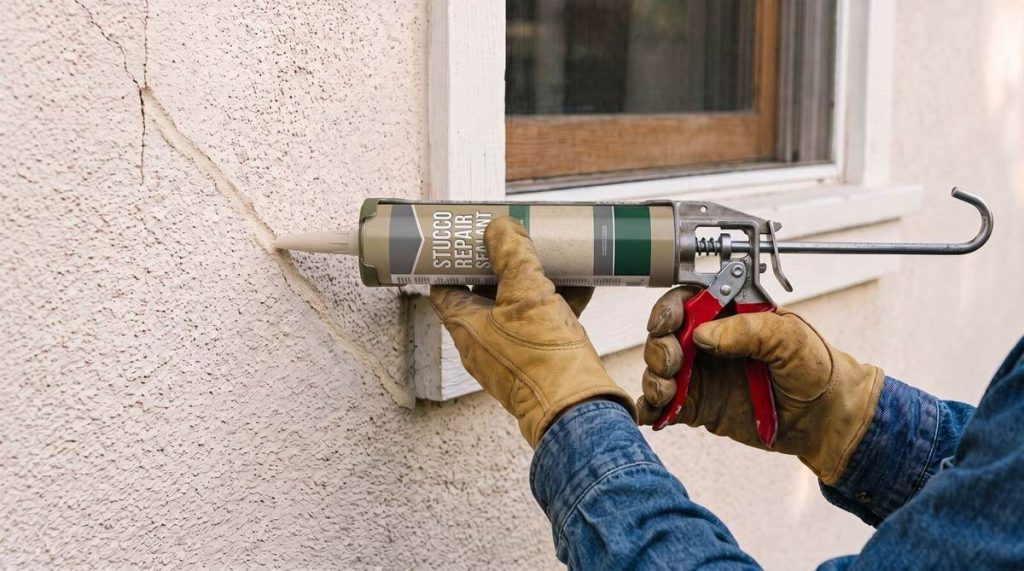
Caulk has its place, such as the joint where stucco meets a window frame or a stone ledge. On a crack in the field of the wall, it tends to struggle:
- It sits on the surface instead of bonding into the stucco.
- Strong sun breaks many sealants down until they shrink and pull loose.
- It does not address the movement, so the wall often cracks again right beside it.
- Smooth caulk rarely blends with a textured finish.
If you want to try a small fix yourself, our guides to how to repair stucco cracks and the best caulk for stucco cracks cover what works and where it stops working.
Avoiding the Striped Wall Look
Cracks are long and narrow, so a texture that is even slightly off shows as a stripe. We match the finish by hand and carry it out past the repair. When a wall has many cracks, patching each one can leave a patchwork effect. In that case we usually suggest a full wall finish coat or an elastomeric coating so the whole surface reads as one. On HOA homes, we can work from your approved color.
Related Services
- Stucco repair for holes, hollow spots and broken corners
- Stucco water damage and inspection when cracks have let water in
- EIFS and synthetic stucco repair for cracks in foam based systems
- Stucco painting and elastomeric coating for walls covered in fine cracks
- Stucco installation and restucco when cracking covers most of the house
What Does Stucco Crack Repair Cost?
National cost guides list hairline crack repair at roughly $8 to $20 per square foot, often with a minimum of about $200 to $600, and larger cracks at about $8 to $30 per square foot. These are typical national ranges, not our prices. Long runs on two story walls, cracks along stone, mesh reinforcement and full wall refinishing tend to move a job toward the upper end. The stucco repair cost guide explains the factors, and a free written estimate gives you a number for your house.
More Stucco Services and Guides You’ll Love
Stucco Crack FAQ
Are hairline cracks in stucco normal?
- Some hairline cracking is common as stucco cures and ages.
- They are usually cosmetic, but sealing them helps keep water out during heavy storms.
Why did my newer home crack so quickly?
- New homes often settle in their first few years, and clay soils can add seasonal movement.
- A crack in a young house is worth watching and documenting, especially if it is getting wider.
When should I call a foundation professional first?
If cracks are wider than about a quarter inch, growing, offset, or showing up with sticking doors and cracks inside, have the foundation evaluated before the stucco is repaired.
Will a repaired crack come back?
- If the movement behind it is still active, it can.
- That is why we look at the cause first and use mesh on cracks that have returned before, so the repair has the best chance to hold.
Can you repair the crack where my stucco meets stone?
Yes. We clean out the failed joint, repair the stucco edge and seal the transition to help keep water out.
More questions? Visit our FAQ.
Where We Repair Cracked Stucco
We repair stucco cracks across New Braunfels and the surrounding Hill Country, including:
- New Braunfels
- San Marcos
- Kyle
- Buda
- Boerne
- Dripping Springs
- Wimberley
- Canyon Lake
- Bulverde and Spring Branch
- Fredericksburg
See all service areas.
Stop Patching the Same Crack Every Year
Prefer to talk? Call us and we will set up a time to look at the damage.