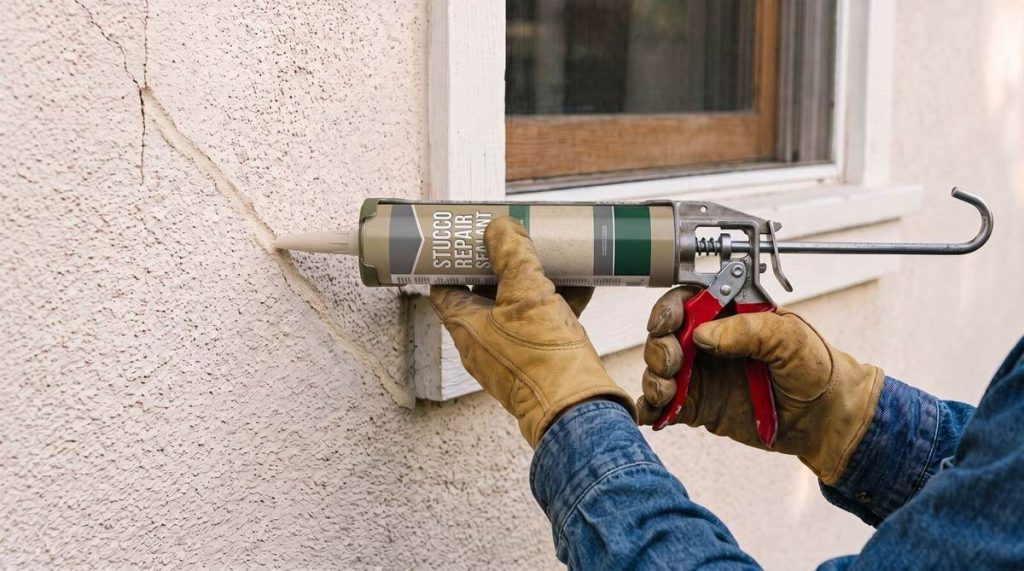
The best caulk for a stucco crack is one that sticks to cement, takes paint, flexes enough to ride out small movement, and has a texture that does not shout “patch” from across the yard. For most thin cracks that means a textured acrylic or elastomeric stucco sealant. For joints where stucco meets windows, doors, trim or stone, a paintable polyurethane or high performance elastomeric sealant is usually the better pick. Clear silicone, the tube most people already have in the garage, is the one to leave on the shelf.
Here is how the main options compare and how to choose the right one for the crack in front of you.
What Stucco Caulk Has to Handle
Stucco is a hard, porous cement surface, and the cracks in it are rarely perfectly still. In the Hill Country a crack sealant also has to cope with:
- Heat and sun. Long summers and strong UV can dry out and harden cheaper sealants.
- Seasonal movement. Expansive clay soils along parts of the I 35 corridor shrink and swell as they dry and wet, which can open and close cracks slightly through the year.
- Hard, wind driven rain. Central Texas storms can drive water sideways into any gap that is not sealed well.
- Stone transitions. Many homes pair stucco with limestone, and the joint between the two needs a sealant that bonds to both.
The Main Caulk Types Compared
| Type | Paintable | Flexibility | Texture | Best use on stucco |
|---|---|---|---|---|
| Sanded acrylic stucco repair caulk | Yes, with latex paint | Moderate | Sandy, blends with stucco | Thin, stable cracks |
| Elastomeric sealant | Yes | High | Smooth, can be textured | Cracks with slight movement, trim joints |
| Polyurethane sealant | Yes, once cured | High | Smooth | Window, door, trim and stone joints |
| Silicone | Generally no | High | Smooth, shiny | Avoid on stucco you plan to paint |
| Basic painter’s acrylic caulk | Yes | Low | Smooth | Not recommended for exterior stucco cracks |
Sanded acrylic stucco repair caulk
This is the product most people mean by “stucco caulk.” It has sand mixed in so the cured surface looks like stucco instead of a rubbery line. Quikrete Stucco Repair is a widely available example. According to the manufacturer, it fills cracks up to 1/2 inch wide, should be applied above 40 degrees, can be painted with latex paint after at least 24 hours, and should not be used in control or expansion joints.
Pros: Easy to texture, blends well, inexpensive. Cons: Stiffer than true elastomerics, so it may reopen on cracks that keep moving.
Elastomeric sealant
Elastomeric sealants stay rubbery after curing, so they stretch and recover as a crack moves. Sashco Big Stretch is one well known example. Its technical data sheet lists stucco among its approved surfaces, says it stretches up to 500 percent of the original joint size, allows application on surfaces from 40 to 120 degrees, and accepts exterior latex paint after about 4 hours. That temperature range is useful during a Hill Country summer, though working in the shade is still smart.
Pros: Handles movement well, strong adhesion, paintable. Cons: Smooth finish, so you need to texture or paint it to blend.
Polyurethane sealant
Polyurethane sealants are a common choice for perimeter joints, where stucco meets window frames, door trim, light fixtures and stone. They grip well to many materials and stay flexible. Check the label for paint timing and for primer requirements on porous surfaces.
Pros: Strong, flexible, durable at transitions. Cons: Harder to tool, messier to work with, smooth surface.
Silicone
Silicone stays flexible, but most paints will not stick to it, it picks up dust, and its residue can keep later coatings and sealants from bonding. On a stucco wall that will ever be painted, it creates more problems than it solves.
How to Choose for Your Crack
| Situation | Good choice |
|---|---|
| Hairline or thin crack, stable | Sanded acrylic stucco repair caulk |
| Thin crack that opens and closes with the seasons | Elastomeric sealant, then texture and paint |
| Gap where stucco meets a window, door or trim | Polyurethane or elastomeric sealant |
| Joint where stucco meets limestone or stone veneer | Flexible sealant rated for both masonry and stucco |
| A whole wall of fine spider web cracks | A crack bridging elastomeric coating over the wall, not caulk |
| Crack wider than about 1/4 inch, offset, or stair stepped | Find the cause first. This is usually past caulk. |
Our step by step guide on how to repair stucco cracks walks through prep, application and texturing.
Application Tips That Make Any Caulk Work Better
- Clean the crack. Wire brush the edges and blow out the dust. Caulk sticks to clean, dry stucco, not dust.
- Check the forecast. Most products want a dry window after application. Big Stretch, for example, asks for 1 to 3 days before direct rain.
- Push it in. Fill the crack, then tool it so the sealant is pressed against both sides.
- Texture the surface. Dab sanded caulk with a damp sponge. For smooth sealants, lightly toss sand onto the wet surface or rely on paint to blend.
- Paint the repair once the label allows it. Paint is what makes the line disappear into the wall as closely as possible.
- Leave control joints alone. Those straight strips are designed to move, and filling them with stiff caulk can push cracking somewhere else.
When Caulk Is the Wrong Answer
Caulk is a sealant, not a structural repair. It will not fix:
- Cracks caused by ongoing foundation or soil movement
- Loose, bulging or hollow sounding stucco
- Water damage already behind the wall
- Cracks that keep coming back in the same place
Store bought kits have their place too, and our look at whether stucco repair kits are worth it covers where they help and where they do not.
National cost guides put a DIY caulk tube around $30. When a professional crack repair is needed, typical national ranges run about $8 to $20 per square foot for hairline crack work, often with a $200 to $600 minimum. More detail is in our stucco repair cost guide.
If you would like a second set of eyes on a crack, our stucco crack repair service looks for the cause first, and we explain it before we quote. We serve Canyon Lake and communities across the Hill Country.
FAQ
Can I use regular caulk on stucco?
Basic painter’s caulk is designed for interior trim and tends to shrink and crack outdoors. Use a product made for stucco or masonry and rated for exterior use.
Is silicone good for stucco cracks?
Generally no. It does not accept most paints, attracts dirt, and can leave residue that keeps future repairs from bonding.
What caulk should I use around windows on a stucco house?
A paintable polyurethane or high performance elastomeric sealant is a common choice for perimeter joints at windows and doors. Make sure the joint is clean and dry first.
Do I need to paint stucco caulk?
On painted stucco, yes. Paint is what blends the repair. Check the label for how long to wait before painting.
Should I caulk the joints in my stucco wall?
Not the control joints. Those are meant to flex. If one has failed or is leaking, it should be repaired with the right joint material rather than stiff crack filler.
Still Not Sure Which Tube to Buy?
Send a photo of the crack with a coin or tape measure in the frame. We will tell you honestly whether it is a caulk job or needs more. Estimates are free and written, with no pressure.