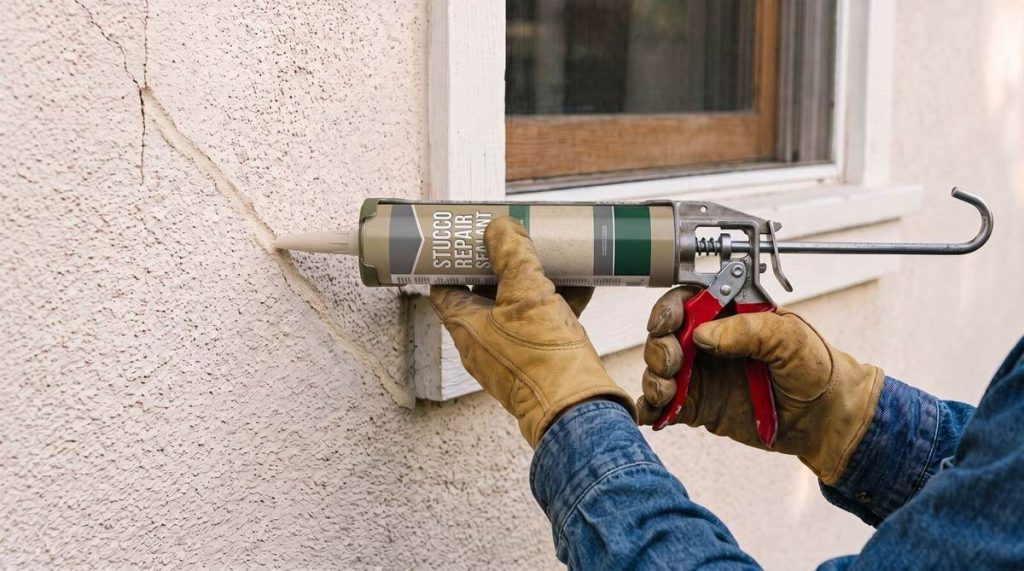
A thin, stable crack in stucco is one of the few exterior repairs a careful homeowner can handle with a caulk gun and a free Saturday morning. You clean the crack, press a textured stucco repair sealant into it, match the surface, and paint once it cures. Wider cracks, cracks that keep lengthening, and cracks with dark staining around them are another story. On Hill Country homes those usually trace back to a moving foundation or water working its way in, and filling them without finding the cause tends to waste the effort.
This guide walks through reading the crack, fixing the small ones, and recognizing the ones that deserve a professional look.
Start by Reading the Crack
The width, direction and location of a crack say more than its length. Grab a ruler or a coin and take a slow walk around the house.
| What you notice | Likely cause | Who should handle it |
|---|---|---|
| Fine random cracks, like a road map, across a wall | Surface shrinkage as the cement cured, or daily heat cycling | Homeowner |
| One thin, straight crack that has not changed in months | Minor shrinkage or a small amount of settling | Homeowner, then keep watching it |
| Diagonal cracks leaving the corners of windows and doors | The framing or foundation has shifted | Have it evaluated |
| Stair step cracks, offset edges, or anything wider than about 1/8 inch | Ongoing settlement or soil movement | Professional |
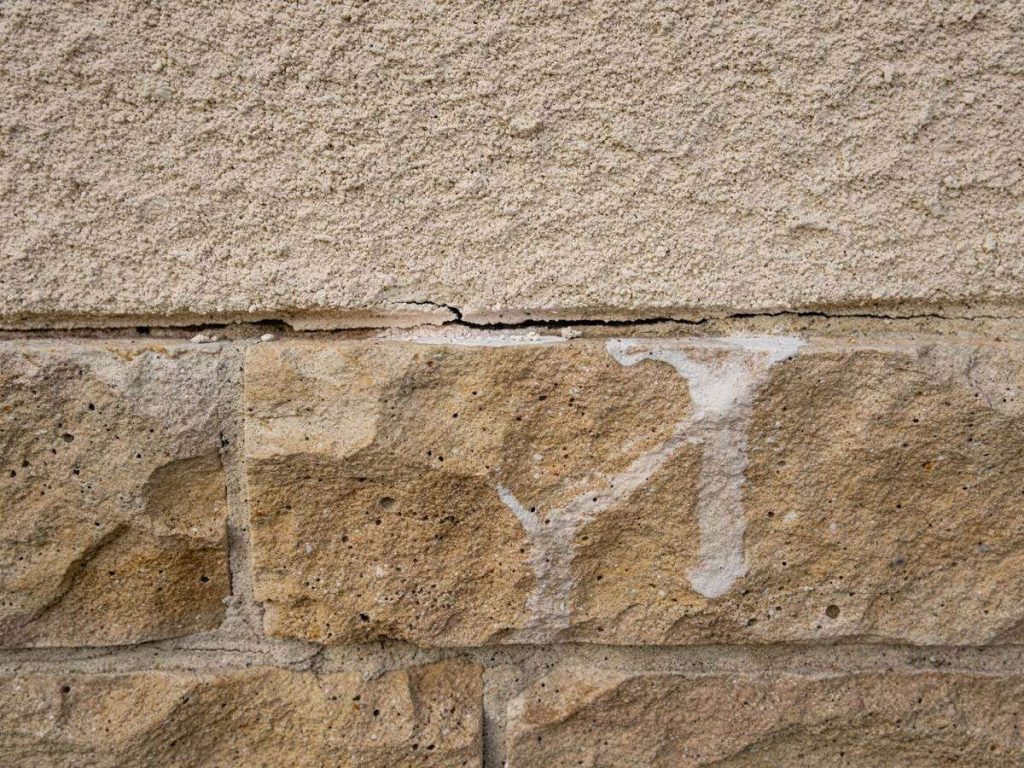
| A crack where stucco meets limestone or stone veneer | Two materials moving at different rates | Professional, since this is a common leak point |
| Cracks with brown streaks, blistered paint or crumbly stucco nearby | Moisture behind the finish | Professional |
A useful habit: mark each end of the crack with a pencil and date it. If the crack runs past your marks after a season of wet and dry weather, the wall is still moving and caulk alone will not keep up.
Why Hill Country Stucco Cracks
Stucco is a rigid cement finish. It does not stretch, so any movement in the structure behind it shows up as a crack. Several local conditions make that movement more likely here.
Soil that moves in two different ways. Much of the I 35 corridor east of the Balcones Escarpment sits on Blackland Prairie clay. The Texas Water Development Board describes Houston Black, the classic soil of that prairie, as a highly expansive clay that shrinks and cracks when dry and swells when wet. West of the escarpment, many lots sit on shallow soil over limestone, where cut and fill pads and uneven bearing can cause their own settling. We cover that difference in detail in clay soil, limestone and stucco cracks in the Hill Country.
Long dry spells followed by heavy rain. A summer drought can pull moisture out of clay soil, and a big storm can put it back in a matter of days. That swing works on slabs and footings, and the stucco above them records it.
Stone and stucco combinations. Custom homes across the region often pair stucco with limestone wainscots, columns or accent walls. The joint between the two materials is a natural weak spot because stone and cement plaster expand and move differently.
Heat and sun. Long, hot summers cycle exterior walls through wide temperature changes every day, which is enough to open fine surface cracks over time.
What You Need for a DIY Crack Repair
- A textured or sanded acrylic stucco repair sealant. Quikrete Stucco Repair is one widely sold option, and the manufacturer rates it for cracks up to 1/2 inch wide.
- A caulk gun and a utility knife
- A stiff wire brush plus a soft brush or shop vacuum
- A damp sponge or a stiff paintbrush for texturing
- Exterior latex paint matched to your wall, if the stucco is painted
Not every tube is a good choice for stucco. Our breakdown of the best caulk for stucco cracks explains which sealant types hold up and which ones to skip.
How to Repair a Small Stucco Crack
- Pick your day. Check the label on your product. Many stucco sealants call for air and surface temperatures above 40 degrees and a dry forecast for at least half a day. In a Hill Country summer the bigger worry is heat, so work early in the morning or on the shaded side of the house.
- Clean out the crack. Scrape away loose sand, peeling paint and dirt with the wire brush. Blow or vacuum out the dust so the sealant can bond to clean material.
- Open a tight crack if needed. If the crack is too narrow for the sealant to enter, run the point of a utility knife along it to create a shallow channel.
- Cut the nozzle at an angle, sized just slightly smaller than the crack.
- Push the material in. Move the gun slowly and press the sealant into the crack instead of laying a bead on top of it.
- Match the texture while it is wet. Dab with a damp sponge or stipple with a brush until the repair reads like the wall around it. A smooth line across a sand or lace finish is easy to spot from the driveway.
- Let it cure and paint. Quikrete lists at least 24 hours before latex paint for its stucco repair product. Paint the repair and feather the paint slightly past it so it blends in as closely as possible.
Many fine cracks on one wall? Filling dozens of hairlines one at a time rarely looks good. A crack bridging coating applied across the whole wall can be a cleaner approach.
Common Mistakes
- Using clear silicone. Most paints will not stick to it, and it collects dust.
- Skimming the surface. A thin film over a crack peels off. The sealant has to go into the opening.
- Caulking control joints. The straight metal or vinyl strips in many stucco walls are there to let the wall move. Quikrete specifically says not to use its stucco repair product in control or expansion joints.
- Sealing over a leak. If water is already getting in, a fresh bead only hides the entry point while damage continues behind it.
When to Call a Pro
Caulk suits small cracks that are not moving. Bring in a stucco contractor when you see:
- Cracks wider than about 1/8 inch, or any crack that keeps growing
- Diagonal or stair step cracks from window and door corners
- Separation between stucco and stone, trim or window frames
- Hollow sounding or loose stucco
- Stains, soft spots or bubbling paint near a crack
- A crack that reopened after you sealed it
A professional repair on a wider crack usually means cutting the crack back, checking for wet lath or framing, and rebuilding it with cement based material so the repair has the best chance to hold. Typical national cost ranges for hairline crack work run about $8 to $20 per square foot, often with a $200 to $600 minimum, and larger cracks run about $8 to $30 per square foot. See our stucco repair cost guide for the full breakdown.
If you would rather have someone look at it, our stucco crack repair service starts with finding why the crack opened, and we explain the cause before we quote. We serve New Braunfels and towns across the Hill Country.
FAQ
Can I paint over a stucco crack instead of filling it?
Standard paint will not close a crack, and the line usually shows again within weeks. Fill it, let it cure, then paint. Elastomeric coatings can bridge very fine hairlines, but not wider cracks.
How long should stucco crack sealant cure before painting?
It varies by product. Quikrete lists at least 24 hours before latex paint for its stucco repair sealant. Cool or humid weather and deep cracks can stretch that time.
Are hairline cracks in stucco a structural problem?
Usually not. Fine cracks are common as cement stucco cures and goes through heat cycles. They are still worth sealing to help keep water out, and worth watching for growth.
Why do stucco cracks keep coming back?
Most often the house is still moving, which is common on expansive clay, or the earlier repair only covered the surface. A crack that returns in the same spot is a signal to look for the cause.
Do cracks near stone accents need special attention?
Yes. The joint where stucco meets limestone or stone veneer is a frequent leak point, and it usually needs a flexible sealant or a properly detailed joint rather than more stucco.
Not Sure Which Kind of Crack You Have?
Send a few photos of the crack with a coin or tape measure in the frame. We will tell you plainly whether it looks like a simple weekend fix or something that needs a closer look. Estimates are free and written, with no pressure.