Stucco Water Damage Repair and Inspection
Stucco is good at hiding water. We trace where it is getting in, check how far it has spread behind the wall, and repair the stucco and the leak point together.
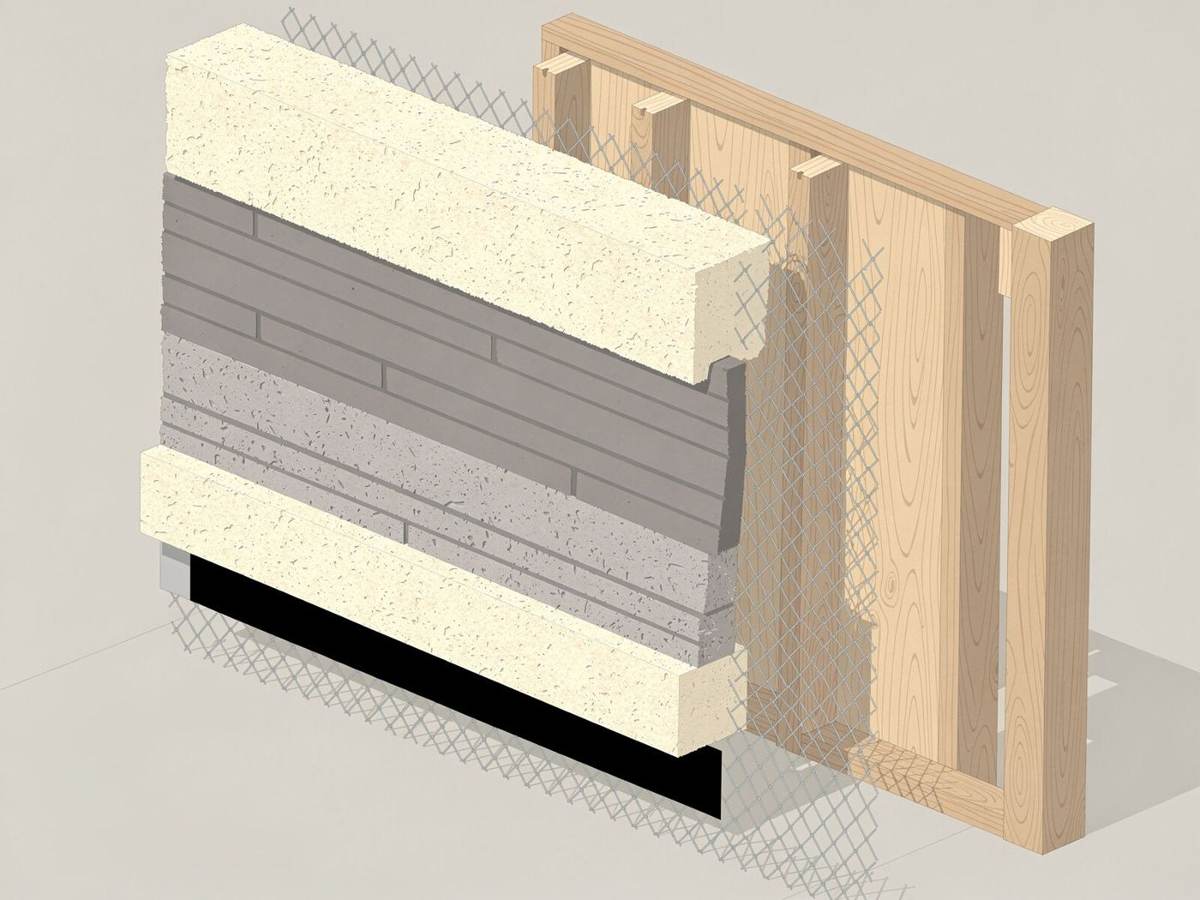
Central Texas weather swings between long dry stretches and storms that dump a lot of rain fast. The region is often called Flash Flood Alley for a reason. A stucco wall can go months without trouble, then take on water in a single storm through a cracked corner, a failed joint at the stone or a missing piece of flashing. By the time a stain shows, the water has often been getting in for a while.
Guadalupe Stucco Co. repairs water damaged stucco and inspects for hidden moisture across New Braunfels and the Hill Country. We find the entry point first, show you what we see and explain the cause before we quote.
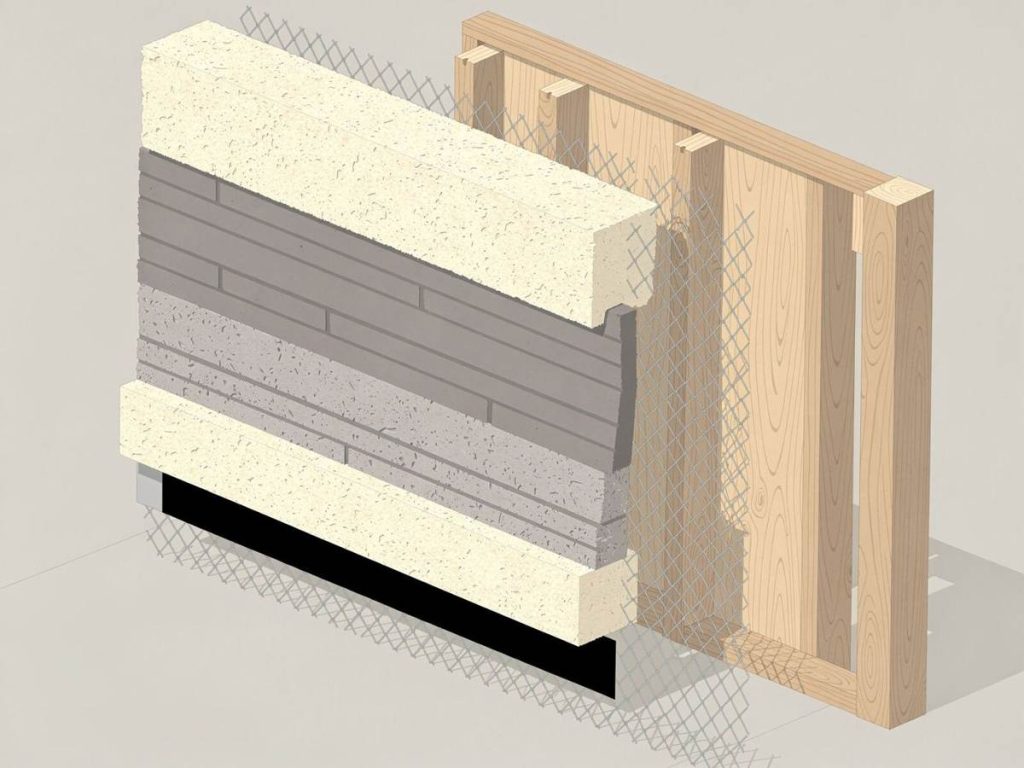
Signs of Water Behind Stucco
Look outside and inside. One sign alone is not proof. Two or three together are worth a closer look. For more detail, read signs of water damage behind stucco.
- Stains spreading down and out from the lower corners of windows and doors
- White, chalky crust on the surface, called efflorescence, left behind as water moves through and dries
- Bubbling or peeling paint on the stucco
- Soft, crumbly or swollen areas that give when pressed
- Cracks that stay dark for days after rain
- Dark streaks below roof lines, gutters or the tops of stone wainscots
- Interior clues such as stained drywall, warped baseboards or a musty smell along an outside wall
Where Water Gets Into Hill Country Stucco
These are the spots we check first:
Stone to stucco transitions
Many homes here combine stucco with limestone or rock veneer. Where stucco sits on top of a stone wainscot or ledge, water can collect on the stone and run behind the stucco if there is no flashing or drainage path. Gaps along the side edges of stone columns are another common entry point.
Roof to wall intersections
Where a lower roof meets a taller stucco wall, a missing kickout flashing can send runoff straight behind the stucco. Stains below these corners are a classic sign.
Windows and doors
Corners concentrate stress, so cracks start there. Failed sealant or poor flashing at the frame lets water in at the same weak spot.
The base of the wall
The weep screed at the bottom of the wall is meant to let water out. When flower beds, mulch, pavers or soil cover it, the wall can stay wet and the bottom of the stucco softens and crumbles.
Chimneys
Stucco chimneys stand above the roof and catch rain and sun on every side. A cracked crown or cap lets water into the chase, and it often shows up as stains on the chimney face or near the fireplace inside.
Flooding and Storm Damage
Parts of our service area sit near the Guadalupe, Comal, Blanco and San Marcos rivers and their creeks, and heavy rain can raise them fast. Stucco that has been under floodwater, or soaked repeatedly by runoff and wind driven rain, needs more than a surface cleanup. Lath can rust, sheathing can soften and insulation can hold moisture long after the water recedes. Our article on stucco repair after flooding covers what to look for and what to document.
Chimney Stucco Repair
Common chimney problems we repair:
- Cracked or crumbling crowns and caps
- Loose or spalling stucco on chimney sides
- Failed flashing where the chimney meets the roof
- Water stains on the chimney face or interior walls
We remove loose material, repair what is underneath, rebuild the stucco and seal the top so water sheds off rather than soaking in. If the chimney needs flue or masonry work beyond the stucco, we will tell you and suggest the right trade. Read more in our guide to chimney stucco repair.
How Moisture Is Checked
- Visual inspection. We walk every wall and roof line looking for stains, cracks, efflorescence, failed sealant, buried weep screed and missing flashing.
- Moisture meter. A handheld meter compares readings at suspect areas with dry areas nearby. It reads near the surface, so it is a screening tool.
- Probe testing. At suspect spots, small holes are drilled and probes read moisture in the sheathing behind the stucco. The holes are sealed afterward. This gives the clearest picture of how wet the wall is.
We explain what each method can and cannot show, and we only suggest probe testing where the signs point to it.
Buying a Stucco Home in the Hill Country?
A general home inspection may note stains or cracks without testing behind the wall. If you are buying a stucco or EIFS home, a moisture check before closing can help you avoid a costly surprise. We can look at the areas your inspector flagged, check moisture and give you a written repair estimate to use in your decision. See stucco inspection when buying a home in the Hill Country.
How We Repair Water Damaged Stucco
Find the source
We trace the water to its entry point and explain the cause before we quote.
Open the wall
Stucco is removed in the damaged area until we reach dry, solid sheathing and framing.
Fix the entry point
We add or replace flashing, sealant, kickout flashing or stone transition details to help keep water out.
Rebuild the layers
New water resistant barrier, lath and stucco coats go on, with the finish matched to the wall as closely as possible.
When Framing or Interior Work Is Needed
Sometimes the water has gone past the sheathing. Studs may be soft, insulation may be wet or drywall may be stained or moldy. When we find that, we stop and show you. Framing, interior and mold work may call for a general contractor, carpenter or mold specialist, and we can coordinate so the wall is opened once and closed up in the right order.
Related Services
- Stucco repair for damaged and missing sections
- Stucco crack repair to close common water entry points
- EIFS and synthetic stucco repair for moisture trapped behind foam
- Stucco painting and elastomeric coating once the wall is dry and sound
- Stucco installation and restucco when damage covers large areas
More Stucco Services and Guides You’ll Love
What Does Stucco Water Damage Repair Cost?
National cost guides list water damage repair that includes new lath at about $30 to $50 per square foot, reaching about $120 per square foot in severe cases. Chimney stucco repair ranges widely, from about $8 to $120 per square foot, and a stucco inspection typically runs about $100 to $500. These are typical national ranges, not our prices. Two story walls, stone transitions, rotted sheathing and difficult access tend to push jobs toward the upper end. Our stucco repair cost guide explains the factors, and you get a free written estimate once we know the cause.
Stucco Water Damage FAQ
Will sealing the crack stop the leak?
- Sometimes. Often the crack is a symptom and the real entry point is missing flashing, a failed stone transition or a buried weep screed.
- We look for the source so the repair is more than cosmetic.
What is the white powder on my stucco?
- That is efflorescence. It forms when water carries salts through the wall and leaves them on the surface as it dries.
- It means water is moving through the stucco.
My stucco got wet in a flood. Does it need to come off?
- Not always. It depends on how long it was wet, what is behind it and whether lath or sheathing was damaged.
- Moisture checks help answer that before anything is removed.
Do you repair chimney stucco?
Yes. We repair cracked crowns, loose stucco and failed flashing on stucco chimneys and reseal them to help shed rain.
Should I get a moisture check before buying a stucco home?
It is a smart step, especially if the inspector noted stains or cracks near windows, stone or the roof line.
Do you handle mold or framing repairs?
- We repair the stucco and the entry points.
- If framing or mold work is needed, we will show you what we found and coordinate with the right trade.
More questions? Visit our FAQ.
Where We Repair Water Damaged Stucco
We handle stucco water damage in New Braunfels and nearby Hill Country towns, including:
- New Braunfels
- San Marcos
- Kyle
- Buda
- Boerne
- Dripping Springs
- Wimberley
- Canyon Lake
- Bulverde and Spring Branch
- Fredericksburg
See all service areas.
Find the Leak Before It Spreads
Prefer to talk? Call us and we will set up a time to look at the damage.