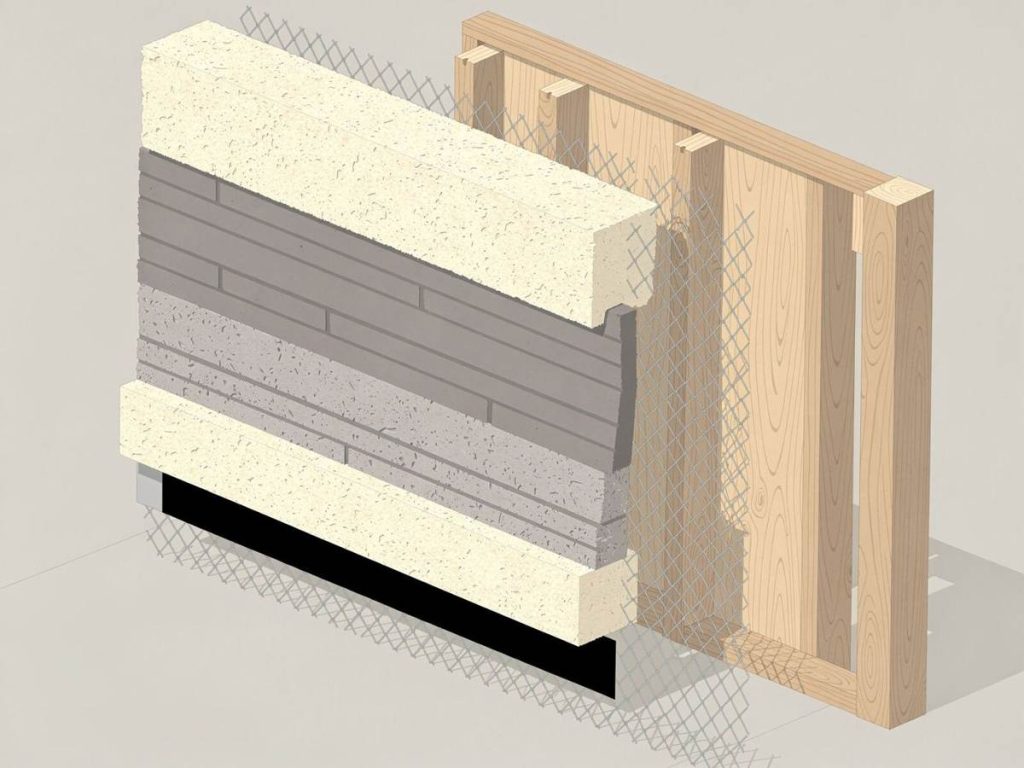
Stucco is good at hiding problems. Water can slip in through a failed window seal, a crack near the roof line or a gap around a light fixture and soak the sheathing and framing for months before anything shows on the surface. By the time a stain or bulge appears, the damage behind it is often larger than the spot you can see.
Knowing the early warning signs gives you a much better chance of catching it while the repair is still small. Here is what to look for, where water usually gets in on Hill Country homes, and what to do if you suspect a problem.
Exterior Warning Signs
- Dark stains or streaks. Stains that spread down and out from window corners, roof lines or light fixtures often mean water is moving inside the wall.
- Stains that linger after rain. Stucco darkens when wet. Areas that stay dark long after the rest of the wall dries are holding extra moisture.
- Bubbling or peeling paint. Moisture pushing out from behind can lift paint in blisters.
- White powdery deposits. Efflorescence, a chalky white residue, forms when water moves salts through cement and leaves them on the surface.
- Soft, crumbling or bulging stucco. Push gently near suspected areas. Stucco should be hard. Soft spots or bulges suggest the material or what is behind it has been compromised.
- Hollow sounding areas. Tap with a screwdriver handle. A hollow sound can mean the stucco has separated from the lath.
- Cracks with staining. A crack by itself is common. A crack with discoloration around it is a stronger sign that water is getting in.
- Rust stains. Orange streaks can mean the metal lath or fasteners behind the stucco are corroding.
- Mold or mildew at the base. Persistent growth near the bottom of the wall can point to poor drainage at the weep screed.
Interior Warning Signs
- Water stains or discoloration on drywall near windows or exterior walls
- Peeling paint or bubbling on interior walls that face outside
- Warped or swollen baseboards and window trim
- A musty smell in rooms along exterior walls
- Mold in closets or corners on outside walls
- Windows that are harder to open, sometimes a sign of swelling framing
Interior signs usually mean the problem has been going on for a while, so they are worth acting on quickly.
Where Water Usually Gets In
- Window and door perimeters. Failed sealant and missing or poorly lapped flashing are among the most common entry points.
- Roof to wall intersections. Where a roof line meets a stucco wall, missing kickout flashing can send water straight into the wall.
- Stone and stucco transitions. The joint where stucco meets limestone or stone veneer, common on custom Hill Country homes, is a frequent leak point when the joint is not detailed correctly.
- Penetrations. Light fixtures, hose bibs, dryer vents, cable lines and old satellite mounts can all let water in if not sealed.
- Cracks. Open cracks, especially near the top of a wall, let water run straight down inside.
- The base of the wall. Stucco that runs into soil, mulch or pavement can wick moisture up and block the weep screed.
- Chimneys and parapets. Tops of chimneys and parapet walls catch water from above.
Why This Matters in the Hill Country
The Texas Hill Country is often called Flash Flood Alley. Thin, rocky soils over limestone and the Balcones Escarpment’s tendency to lift moist Gulf air into heavy storms can produce intense downpours in a short time. During the Memorial Day weekend flood of 2015, the Blanco River at Wimberley rose to a record crest, and towns along the Guadalupe, Comal and San Marcos rivers have their own flood histories.
Even homes well away from a river see the effect of those storms. Heavy, wind driven rain tests every window seal, flashing detail and crack on a wall at once. If your home was exposed to floodwater itself, our guide to stucco repair after flooding covers what to check next.
What to Do If You Suspect Water Damage
- Document it. Take dated photos of stains, cracks and interior signs. This helps track changes and can help with insurance questions.
- Check the obvious entry points. Look at window and door sealant, roof to wall flashing and any recent penetrations.
- Do not seal over it. Caulking or painting over a stained area can trap water inside and hide the problem.
- Consider a moisture inspection. Professionals use moisture meters and sometimes small probe holes to find how far the moisture has spread. National cost guides put stucco inspections at about $100 to $500.
- Fix the source first. Repairing stucco without stopping the leak usually means the damage comes back.
For cracks that do not show signs of water, our guide on how to repair stucco cracks explains which ones are safe to handle yourself.
What a Water Damage Repair Involves
A proper repair usually means:
- Removing the stucco in the damaged area to see what is underneath
- Drying and evaluating the sheathing and framing, and replacing anything rotted
- Replacing the weather barrier and lath with correct laps and flashing
- Correcting the entry point, such as window flashing or kickout flashing
- Rebuilding the stucco in layers and matching the texture and color as closely as possible
Typical national ranges put stucco water damage repair with lath replacement at about $30 to $50 per square foot, with severe cases running up to about $120 per square foot. Two story walls, stone transitions and difficult access tend to push jobs toward the upper end. See our stucco repair cost guide for more.
Our stucco water damage repair service starts by finding where the water is getting in, and we explain the cause before we give a written quote. We serve Wimberley and towns across the Hill Country.
FAQ
How can I tell if there is water behind my stucco?
Look for stains that spread from windows or roof lines, areas that stay dark after rain, bubbling paint, soft or hollow spots, and interior signs like musty smells or stained drywall. A moisture inspection can confirm it.
Is water damage behind stucco serious?
It can be. Trapped moisture can rot sheathing and framing and lead to mold. The earlier it is found, the smaller the repair tends to be.
Can I fix water damaged stucco myself?
Surface cracks without moisture are often DIY friendly. Water damage usually requires removing stucco, checking the framing and fixing flashing, which is best handled by a professional.
Does homeowners insurance cover water damage behind stucco?
It depends on your policy and the cause. Sudden storm damage is often treated differently from long term leaks. Document what you find and check with your insurer.
How often should I check my stucco for water damage?
A walk around the house after major storms and once or twice a year is a good habit. Pay closest attention to windows, doors, roof lines and stone transitions.
Seeing Stains or Soft Spots?
Send us photos of the area and a wider shot of the wall. We will tell you honestly what it looks like and whether it needs a closer look. Estimates are free and written, with no pressure.