
The Hill Country is beautiful in part because of its rivers, and those same rivers can rise with frightening speed. After a flood or a long stretch of heavy rain, stucco often looks fine from the outside. The real question is what happened to the layers behind it: the lath, the moisture barrier, the sheathing and the framing.
This guide covers what to check once it is safe, how water behaves behind stucco, and how repairs are usually approached. If your home was flooded, your safety and your family come first. Wall repairs can wait until the house has been cleared as safe to enter.
Why Flooding Hits This Region So Hard
Central Texas has a long history of flash floods. Researchers and news outlets often call the area along the Balcones Escarpment “Flash Flood Alley.” The escarpment is a line of steep hills and cliffs formed along a geologic fault. When warm, moist air from the Gulf rises over it, it can drop heavy rain in a short time, and the thin, rocky soils of the Hill Country do not soak up much of it. Water sheets off into creeks and rivers that rise quickly.
Local history shows how serious that can be. The National Weather Service documented the October 1998 flood, when heavy rain fell for up to a day and a half across the region and homes along the Guadalupe River between Canyon Lake and Seguin were washed off their foundations. Over Memorial Day weekend in 2015, the Blanco River through Wimberley rose more than 40 feet to a record crest, according to news reports, and hundreds of homes were damaged or destroyed.
You do not need a historic flood to have wet walls, though. A single heavy storm with strong wind can drive rain sideways into cracks, window joints and roof to wall connections.
Two Kinds of Water Damage
Rising floodwater soaks the wall from the bottom up. Water can sit against the stucco for hours or days, reach the sheathing and insulation, and carry mud, sewage and debris with it.
Wind driven rain enters from above or from the side through openings in the system. It tends to cause slower, hidden damage around windows, doors, roof lines and cracks.
Both types can leave the stucco face looking normal while the materials behind it stay wet.
First Steps Once It Is Safe
- Follow official guidance on when it is safe to return, and watch for electrical hazards and damaged structure.
- Take photos and video of every wall, inside and out, including any visible water lines, before cleanup starts.
- Call your insurer to report damage. Standard homeowners policies generally do not cover flood damage; flood coverage usually comes from a separate flood policy. Wind driven rain and storm damage may be handled differently, so ask.
- Remove wet materials inside that cannot be dried, such as soaked drywall, insulation and carpet, following health department guidance for floodwater.
- Clear the base of the walls. Pull mud, debris and mulch away from the bottom of the stucco so the weep screed can drain.
- Let the wall dry and keep notes on stains or damp areas that do not fade.
Our guide on hail damage and insurance claims has more general tips on documenting storm damage.
What to Look For on the Outside
After the water recedes and the walls have had time to dry, check for:
- Water lines and staining that stay visible long after the surface dries
- Efflorescence, a white, chalky residue left as water moves salts to the surface
- Bubbling or peeling paint on the stucco
- Soft, crumbly or hollow sounding areas when you tap gently
- New cracks, especially near the base of the wall or around doors
- Rust stains, which can mean the metal lath or trim behind the stucco is corroding
- Bulging or bowed sections, which can point to swollen sheathing behind the stucco
Our article on the signs of water damage behind stucco goes deeper on each warning sign.
What to Look For on the Inside
- Stains, swelling or soft spots in drywall on exterior walls
- Swollen or separated baseboards
- A musty smell that does not clear after drying
- Visible mold on walls or in closets along exterior walls
How Stucco Is Repaired After Water Damage
Cement stucco itself handles getting wet fairly well. The trouble is usually behind it. A typical repair approach looks like this:
- Find the extent of the damage. A contractor may use moisture readings and small test openings to see how far the water reached.
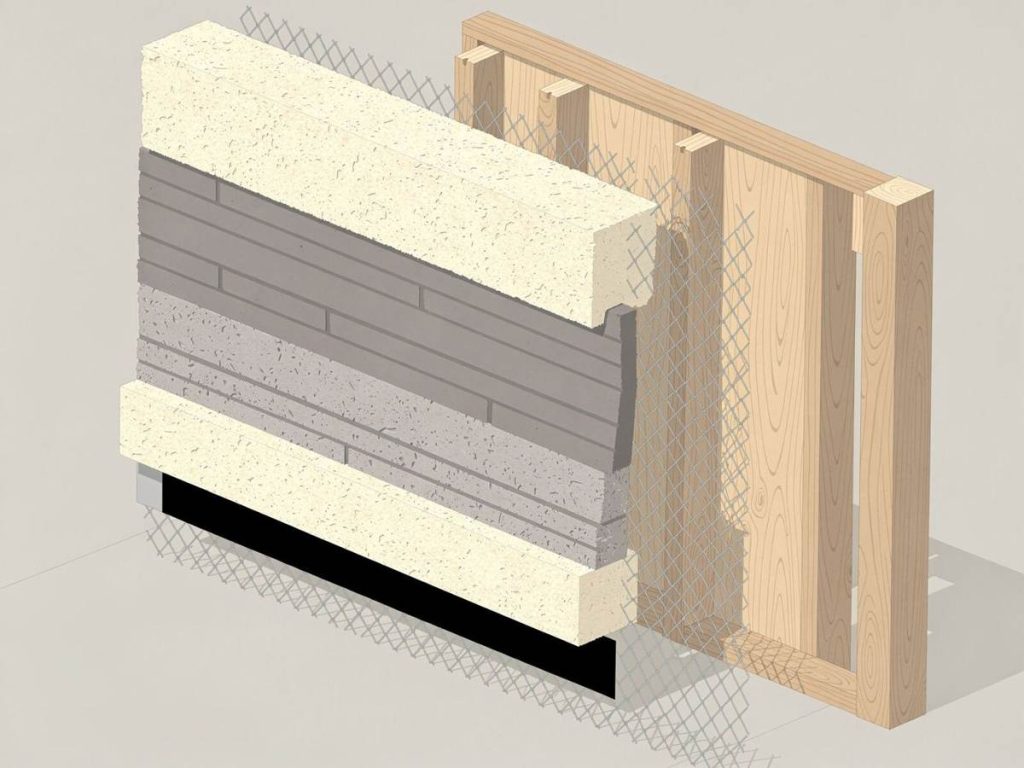
- Open the affected section. Stucco is cut back to sound material so the lath, moisture barrier and sheathing can be inspected.
- Replace damaged layers. Rusted lath, torn or soaked moisture barrier and swollen sheathing are replaced. Framing damage may need a carpenter.
- Let everything dry. Closing a wall over wet framing can trap moisture and invite mold.
- Restore drainage. Weep screeds are cleared or replaced and set with proper clearance above soil and paving.
- Rebuild the stucco with base coats and a finish coat textured and colored to blend in as closely as possible with the rest of the wall.
For wind driven rain leaks, the repair also includes finding and fixing the entry point, such as a failed window flashing or an open crack, so the repair has the best chance to hold.
What Water Damage Repairs Typically Cost
National cost guides give these typical ranges. They are national reference figures, not local quotes:
- Water damage repair with lath replacement: about $30 to $50 per square foot, up to about $120 for severe damage
- Small localized repairs: about $60 to $120 per square foot
- Permits for larger work: about $150 to $2,000, depending on the town and scope
Two story walls and difficult access tend to push work toward the upper end. Our stucco repair cost guide explains the line items.
Getting Ahead of the Next Storm
You cannot stop a river from rising, but you can make walls more resistant to everyday heavy rain:
- Seal small cracks before spring and fall storm seasons.
- Keep soil, mulch and pavers below the bottom edge of the stucco.
- Make sure gutters and downspouts carry water away from walls.
- Check caulk and sealant around windows, doors and light fixtures each year.
- Have stains or soft spots checked early, while repairs are smaller.
When to Call Us
Guadalupe Stucco Co. helps homeowners figure out how far water got and what needs to be opened up. We explain the cause and the scope before you get a free written estimate, and there is no pressure. Our stucco water damage repair service covers New Braunfels and the Hill Country, including river communities like Wimberley.
FAQ
Does stucco need to be replaced after a flood?
Not always. The stucco face often survives. Sections may need to be opened so the lath, moisture barrier and sheathing behind them can be checked and replaced if damaged.
How long should stucco dry before repairs?
It depends on how wet the wall got, the weather and the materials behind it. The key is that framing and sheathing are dry before the wall is closed. Moisture readings help confirm that.
Does homeowners insurance cover flood damage to stucco?
Standard homeowners policies generally exclude flood. Flood coverage usually comes from a separate flood policy. Check your policy or ask your agent for details on your situation.
Can heavy rain damage stucco without a flood?
Yes. Wind driven rain can get in through cracks, window joints and roof to wall connections. That damage is often slow and hidden, so stains and soft spots are worth checking.
Need your walls checked after a storm? Send us photos of any stains, water lines or damaged areas, plus a wide shot of each side of the house. We will tell you what we see and what the next step should be. Photo estimates are free.