
From the curb, EIFS and traditional stucco can look almost identical. Both have a textured, seamless finish and both come in a wide range of colors. Underneath, they are very different systems. Cement stucco is a hard layer of cement plaster over lath. EIFS, short for Exterior Insulation and Finish System and often called synthetic stucco, is a layer of foam insulation board covered with a thin reinforced base coat and an acrylic finish.
That difference matters when you are patching a hole, hiring a contractor, or buying a home. The wrong repair material on the wrong system can fail quickly or trap water. Here is how to tell which one you have.
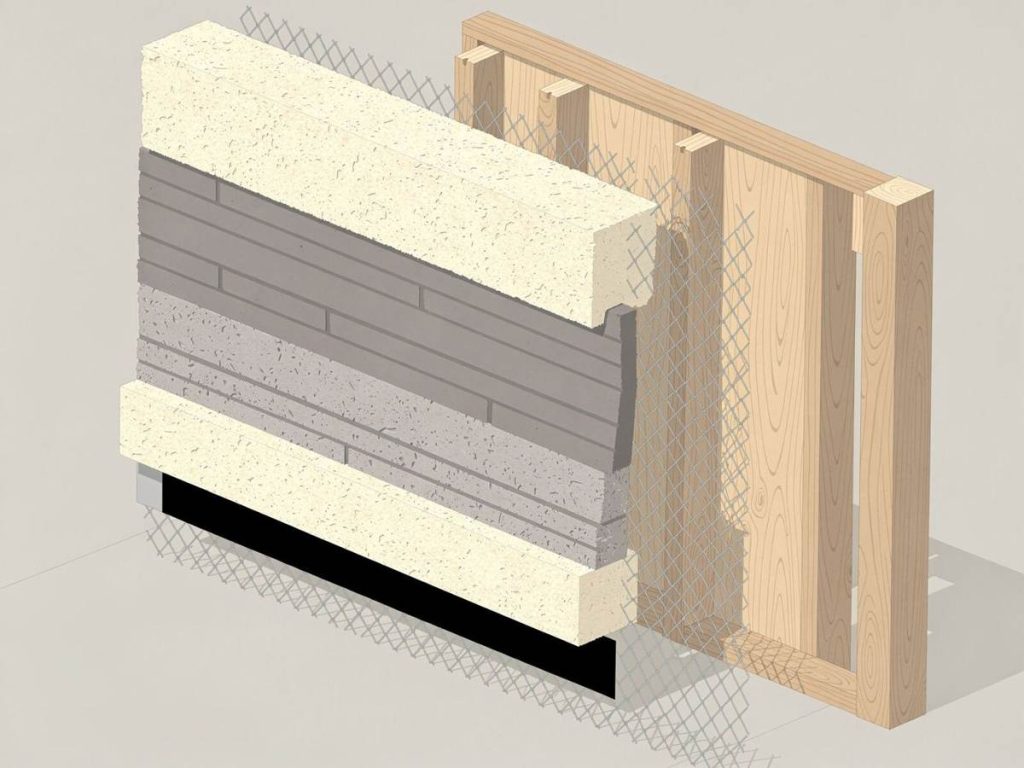
How Each System Is Built
Traditional cement stucco is usually applied in three coats, scratch, brown and finish, over metal lath and a weather barrier. Industry references commonly put three coat stucco at about 7/8 inch thick. One coat systems are thinner, often around 3/8 to 1/2 inch.
EIFS starts with rigid foam board attached to the sheathing. A base coat with embedded fiberglass mesh goes over the foam, followed by a thin acrylic finish. Total thickness, including the foam, is often 1 inch or more, but the hard skin over the foam is typically only a fraction of an inch.
| Feature | Cement stucco | EIFS |
|---|---|---|
| Core material | Portland cement plaster over lath | Foam insulation board |
| Feel when pressed | Hard, rock like | May flex slightly, can feel softer |
| Sound when tapped | Solid | Hollow |
| Insulation value | Low | Higher, thanks to the foam |
| Impact resistance | Higher | Lower, the skin can dent or puncture |
| Typical repair materials | Cement based patch and finish | Foam, mesh, base coat and acrylic finish |
Five Simple Checks
1. The tap test
Knock firmly on the wall with your knuckles or the handle of a screwdriver. Cement stucco sounds and feels solid. EIFS tends to sound hollow and may give slightly.
2. The press test
Press firmly with your thumb on a lower section of wall. Cement stucco will not move at all. EIFS may flex a tiny amount and can feel slightly softer.
3. Look at the bottom edge
Walk the base of the wall. Cement stucco usually ends at a metal weep screed, a strip with small holes that lets water drain out. EIFS often ends with mesh and base coat wrapped around the bottom edge of the foam, or on newer installations, a plastic drainage track.
4. Look at openings
Check around exterior outlets, hose bibs, light fixtures and vents. With the power off, a peek at the cut edge of the cladding around an opening may show foam on an EIFS wall or a dense gray cement layer on stucco.
5. Look for impact damage
Small dents, punctures or soft spots from hail, lawn equipment or a basketball are more common on EIFS, because the finish skin over the foam is thin. Cement stucco tends to chip or crack instead of denting.
If you are still unsure, a stucco professional or a home inspector familiar with both systems can usually tell quickly with a small, discreet inspection.
Why the Difference Matters for Repairs
The repair methods do not mix. Cement based patching compounds do not bond well to EIFS foam and are much heavier than the system was designed to carry. Acrylic EIFS materials used on cement stucco may not match its texture or behave the same way as the wall around them. Our guide on how to patch holes in stucco covers the cement stucco side.
A proper EIFS repair usually includes:
- Cutting out the damaged foam and finish to sound material
- Checking the sheathing behind it for moisture
- Installing new foam board to match the thickness
- Applying base coat with embedded mesh lapped onto the existing mesh
- Applying a finish coat textured and colored to blend in as closely as possible
Water and EIFS
Older barrier style EIFS was designed to stop water at the surface, with no planned path for water that got past it. Where sealant joints at windows, doors and roof lines failed, water could get trapped behind the foam and damage the sheathing and framing without much visible warning. Many newer EIFS installations include a drainage layer behind the foam to let incidental water escape.
In the Hill Country, heavy rain events and wind driven storms make the condition of those joints especially important. If you have EIFS, keep an eye on sealant around windows, doors, light fixtures and where the wall meets the roof.
What EIFS and Stucco Repairs Cost
Typical national ranges put EIFS repair at about $30 to $50 per square foot, or about $300 to $500 for a 10 square foot area. Small cement stucco patches typically run about $200 to $600 nationally, and most stucco repair jobs land between about $600 and $3,000. Access, height and how far moisture has spread can push either toward the upper end. Our stucco repair cost guide explains the factors.
Buying a Home With EIFS or Stucco?
If you are under contract on a home and are not sure which system it has, ask your inspector to identify it in the report. On EIFS homes, a specialized moisture inspection is often worth considering. Our guide to stucco inspection when buying a home in the Hill Country walks through what to ask for.
Need Help With EIFS?
Our EIFS repair service starts by confirming what is on your house and checking for moisture before we recommend anything, and we explain what we find before we quote. We serve Dripping Springs and towns across the Hill Country.
FAQ
Is EIFS the same as synthetic stucco?
Yes, in everyday use those terms usually describe the same thing: a foam based system with a thin acrylic finish, as opposed to traditional cement stucco.
Is EIFS bad?
Not inherently. It offers better insulation than cement stucco. Problems usually come from water getting behind it at poorly sealed joints, especially on older barrier systems without drainage.
Can EIFS be repaired, or does it need to be replaced?
Many EIFS problems can be repaired in sections. Widespread moisture damage behind the foam can make larger replacement more practical. A moisture check helps decide.
Can I patch EIFS with regular stucco patch?
It is not recommended. EIFS repairs use foam, mesh, base coat and an acrylic finish designed for that system.
Which is better for a Hill Country home, EIFS or stucco?
Both can perform well when installed and maintained properly. Cement stucco is harder and more impact resistant. EIFS insulates better but needs careful attention to sealant joints and drainage.
Not Sure What Is on Your House?
Send us a few close up photos of your wall, the bottom edge, and an area around a window or outlet. We will give you our honest read. Estimates are free and written, with no pressure.