For the right job, yes. A tube of textured stucco sealant or a quart of premixed patch can take care of a hairline crack or a shallow ding for the cost of a takeout lunch. Where kits disappoint is when they are used on damage they were never made for: deep holes, loose or hollow stucco, cracks that keep moving, and anything with water behind it. On those, a kit can cover the symptom for a while and let the real problem grow.
Here is a plain look at what is on the shelf, what each product actually does, and how to decide whether your repair belongs in the kit column or the contractor column.
What Counts as a Stucco Repair Kit
“Kit” is a loose term. At a home center you will usually find three kinds of products sold for stucco touch ups.
1. Textured stucco repair caulk. A sanded acrylic or elastomeric sealant in a standard caulk tube. Quikrete Stucco Repair is a common example, and the manufacturer rates it for cracks up to 1/2 inch wide. Best for: thin cracks and small gaps.
2. Premixed stucco patch. A ready to use, sanded acrylic paste sold in a tub. Quikrete’s premixed Stucco Patch comes in 1 quart pails, and its data sheet limits each layer to 1/4 inch thick, with 24 hours between layers for anything deeper. DAP sells a similar premixed stucco patch in a 32 ounce container. Best for: chips, nail holes, shallow gouges and small surface defects.
3. Dry bagged stucco mixes. Portland cement based products such as Quikrete Scratch and Brown Base Coat Stucco, sold in large bags and mixed with water. These are not really kits, but they are what a DIYer reaches for on a deeper patch. Best for: rebuilding a damaged area in layers, with some skill and patience.
National cost guides put a DIY caulk tube around $30 and a patch kit around $30 to $40, so the material cost is small either way. The real cost of a failed kit repair is time, and sometimes the hidden damage that keeps going behind it.
Where Kits Work Well
Kits are a good fit when the damage is small, dry and stable:
- Hairline or thin cracks that have not grown over a season
- Small chips from a ladder, a hose reel or a lawn mower
- Nail, screw or anchor holes from old fixtures, house numbers or holiday lights
- Shallow surface dings no deeper than the product label allows
- Touch ups on walls you plan to paint anyway
In these cases a careful homeowner can get a result that blends in as closely as possible, especially once the area is painted.
Where Kits Fall Short
Depth. Premixed acrylic patch is a surface product. When a hole goes through the finish coat into the brown coat or down to the lath, thin acrylic layers do not rebuild the wall the way cement based layers do. Our guide on how to patch holes in stucco explains the layered approach for deeper damage.
Movement. If a crack is opening because of soil movement, and that is common on the expansive clay found along parts of the I 35 corridor, a rigid patch will crack again. A flexible sealant may hold longer, but the cause is still there.
Water. Brown streaks, soft spots and bubbling paint mean moisture is behind the stucco. A patch over that area traps the water in the wall.
Color and texture. Premixed patch typically comes in a single off white color. On an unpainted, integrally colored finish, which is common on newer homes in HOA neighborhoods, a patch will not match unless you paint the whole wall section or tint the repair to blend in as closely as possible.
Large areas. Kits are sized for spots, not walls. Several square feet of damage is beyond what a quart of patch can handle well.
Kit or Pro? A Quick Decision Guide
| Your situation | Kit is reasonable | Call a pro |
|---|---|---|
| Hairline crack, stable, no stains | Yes | |
| Crack wider than about 1/8 inch or growing | Yes | |
| Small chip or fastener hole | Yes | |
| Hole deeper than about 1/4 inch or down to mesh | Usually | |
| Hollow sounding or loose stucco | Yes | |
| Stains, soft areas or bubbling | Yes | |
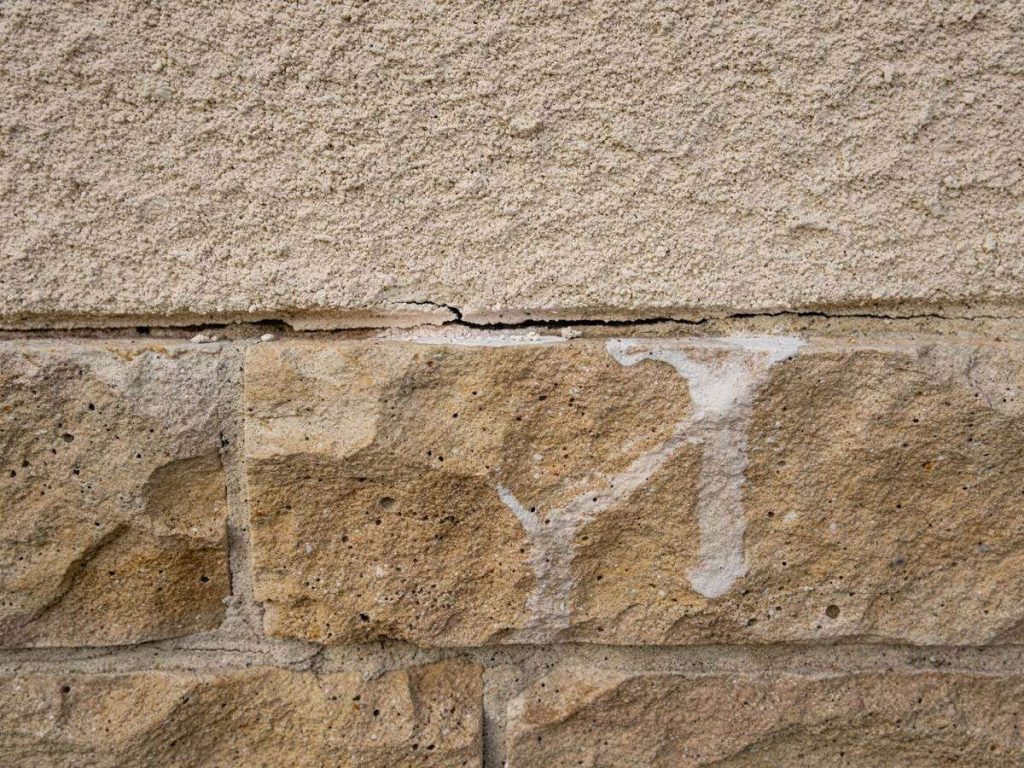
| Damage where stucco meets stone or windows | Yes | |
| Unpainted integral color wall with HOA rules | Maybe, test first | Often |
Tips If You Use a Kit
- Read the label limits for crack width, layer thickness and temperature. Quikrete’s premixed patch calls for air and surface temperatures above 50 degrees and no rain expected within 12 hours.
- Clean the area well. Brush out loose sand and dust. Patches and sealants fail first on dirty edges.
- Do not overfill. Build deep spots in layers instead of one thick pass that can slump or shrink.
- Texture while wet. A damp sponge, a stiff brush or a light spatter of material helps match sand, lace and dash finishes.
- Paint the repair. Most of these products are meant to be painted with latex paint after curing, and painting is what makes a patch blend.
- Avoid summer afternoons. Hill Country heat can skin a patch over before it bonds. Work early or in shade.
What a Professional Repair Includes
When a repair is past kit territory, a contractor will usually:
- Tap and inspect the area to find how far loose or wet stucco extends
- Cut back to sound material and check the lath and weather barrier
- Rebuild in cement based layers with the right curing time
- Match the texture and color to the wall around it
- Seal transitions at windows, trim and stone with a suitable sealant
National cost guides put small patch repairs at about $200 to $600, holes at about $250 to $450 each, and most stucco repair jobs between about $600 and $3,000. Our stucco repair cost guide explains what moves a job up or down those ranges.
If you have tried a kit and the damage came back, or you just want a second opinion first, our stucco repair service starts by finding the cause, and we explain what we find before quoting. We serve homeowners in Bulverde and Spring Branch and across the Hill Country.
FAQ
Do stucco repair kits match my existing stucco?
They can match texture reasonably well if you work the surface while it is wet. Color is harder. Most premixed patches come in one off white shade, so plan to paint, or ask a pro about tinting on integrally colored stucco.
How deep can I fill with premixed stucco patch?
Check your product. Quikrete limits its premixed patch to 1/4 inch per layer, with 24 hours between layers. Deep holes are better rebuilt with cement based base coat material.
Is caulk or patch better for stucco cracks?
For thin cracks, a textured stucco sealant in a tube is usually easier and more flexible. Patch is better for chips and shallow holes. For help choosing a sealant, see our guide to the best caulk for stucco cracks.
Will a stucco repair kit stop a leak?
Not reliably. If water is already getting behind the stucco, a surface patch can hide the entry point while the damage spreads. Find and fix the source first.
Want a Quick Opinion Before You Buy a Kit?
Send us a few photos of the damage. We will tell you honestly whether a kit makes sense or the repair needs more. Estimates are free and written, with no pressure.