
Holes in stucco show up for all kinds of reasons. A previous owner pulls down a satellite dish, a security camera gets moved, a ladder foot slips, a dryer vent gets relocated, or a storm sends something into the wall. The fix depends almost entirely on how deep the hole goes. A screw hole is a five minute job. A hole that reaches the wire lath needs to be rebuilt in layers, the same way the wall was built in the first place.
Below is how to size up the hole, the right method for each depth, and the warning signs that mean the hole is only the visible part of the problem.
Know What Is Under the Surface
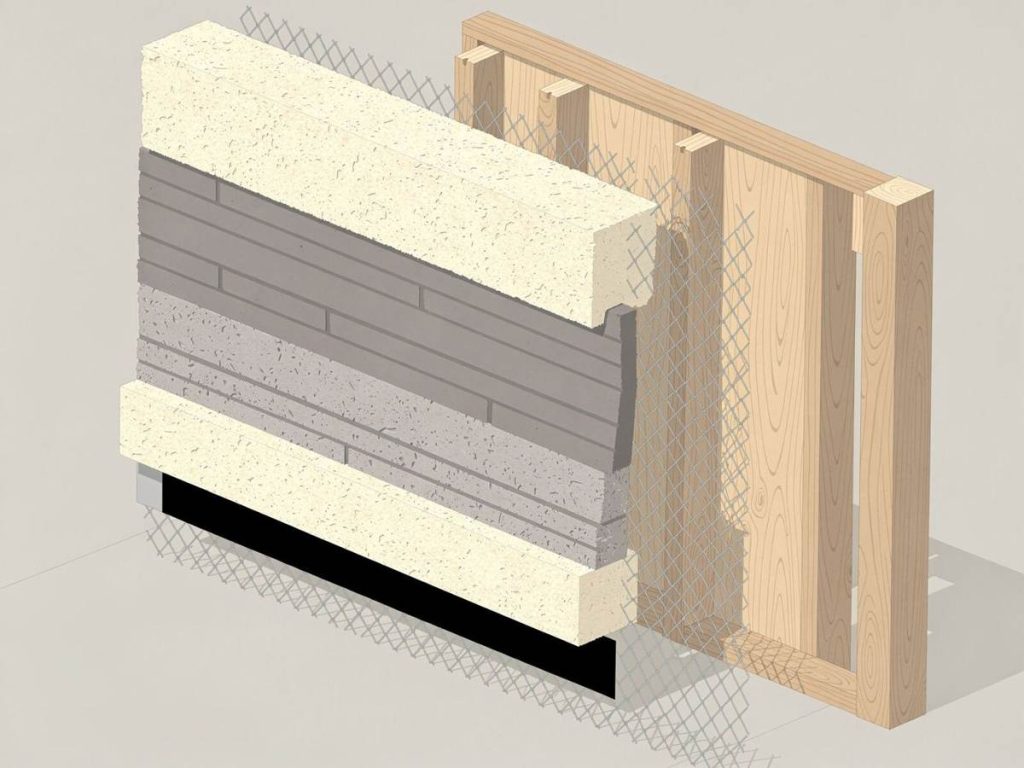
Traditional cement stucco is usually built in three coats over a weather barrier and metal lath:
- Scratch coat: the first layer, pressed into the lath and scored so the next coat can grip
- Brown coat: the leveling layer that gives the wall its thickness and flat plane
- Finish coat: the thin top layer that carries the texture and often the color
Industry references commonly put a full three coat system at about 7/8 inch thick. Some newer homes use one coat systems that are thinner. Knowing which layers a hole reaches tells you which layers you need to rebuild.
Before you start, also confirm the wall is actually cement stucco and not EIFS, a foam based system that sounds hollow when tapped and feels softer under pressure. EIFS is patched with different materials, so the steps below do not apply to it.
Small Holes: Fasteners and Chips
Screw, nail and anchor holes up to roughly the size of a pencil are the easy ones.
- Pull any old anchors with pliers.
- Brush out dust and loose grains.
- Fill with a premixed sanded acrylic stucco patch or a textured stucco repair caulk.
- Dab the surface with a damp sponge or brush to pick up the surrounding texture.
- Let it cure, then paint with exterior latex paint.
Premixed patch has limits. Quikrete’s premixed Stucco Patch, for example, is rated for repairs up to 1/4 inch thick per layer. For a quick comparison of the products on the shelf, see are stucco repair kits worth it.
Medium Holes: Through the Finish Coat
When a hole is larger than a coin and goes through the finish into the brown coat, but the lath behind it is intact:
- Cut back to solid stucco. Tap around the hole with a screwdriver handle. Remove anything loose or hollow sounding until the edges are firm.
- Clean and dampen. Brush out dust, then lightly mist the edges with water so the old stucco does not pull moisture out of the new material too fast.
- Fill in layers. Use a cement based base coat mix and build up in passes rather than one thick fill. Leave the last pass slightly below the surface.
- Keep it damp while it cures. Cement stucco gains strength as it cures, and drying too fast is a common cause of shrinkage cracks. Light misting helps, especially in Hill Country heat.
- Apply the finish. Use a finish coat or textured patch and work it to match the wall.
Large Holes: Down to the Lath
If you can see building paper, wire mesh or framing, the repair needs more care.
- Square up the opening. Cut the damaged stucco back to a clean shape with an angle grinder and masonry blade. Wear eye and lung protection, since cutting cement creates fine silica dust.
- Check what is behind it. Look for wet or dark sheathing, rusted lath or torn building paper. If the framing is soft or stained, stop and have it evaluated before you close the wall.
- Patch the weather barrier. Lap new building paper so the upper layer overlaps the lower one and water sheds outward.
- Install new lath. Fasten new metal lath over the opening and overlap it onto the existing lath where possible.
- Apply the scratch coat. Press it firmly into the lath and score it horizontally once it firms up.
- Apply the brown coat after the scratch coat has set, and bring it close to the surrounding plane.
- Apply the finish coat and texture it to match.
- Paint or color once fully cured.
Getting the Texture to Blend
A sound patch can still stand out if the texture is wrong. Stucco finishes range from nearly smooth to heavy sand, lace and dash textures, and the same subdivision can have several. Practice on a scrap board first. A sponge float, a whisk broom, a trowel skip or a hand spatter can all help. On unpainted walls with color mixed into the finish, matching is harder, and painting the full wall section is sometimes the cleanest option. If your neighborhood has an HOA, it may also have rules about exterior colors. We go deeper on this in matching stucco texture and color.
When a Hole Is Hiding a Bigger Problem
Stop and get a professional opinion if you find:
- Wet, dark or crumbling sheathing behind the hole
- Rusted or missing lath across a wider area
- Stucco that sounds hollow well beyond the hole
- Brown staining that runs below the damaged spot
- A hole near a window, door or roof line where water could have been entering for a while
Holes from old fixtures and pipes are a common way water gets into a wall. If a mount sat on the house for years without a good seal, the damage may extend well past the hole you can see.
What Professional Hole Repair Costs
National cost guides put stucco hole repair at about $250 to $450 each, and small patch repairs generally at about $200 to $600. Multiple holes, a two story wall, a stone transition or a difficult texture match tend to push jobs toward the upper end. Our stucco repair cost guide covers the rest of the ranges.
If a hole turned out bigger than expected, our stucco repair service can rebuild it layer by layer and check what is behind it first. We work with homeowners in Buda and throughout the Hill Country.
FAQ
Can I fill a stucco hole with spray foam or spackle?
It is not a good idea. Spray foam and interior spackle are not made for exterior cement walls and tend to shrink, absorb water or fail under paint. Use stucco patch or a cement based mix.
How long does a stucco patch take to cure?
It depends on the product and the weather. Quikrete lists at least 24 hours after the top layer hardens before painting its premixed patch. Cement based layers need more time between coats, so follow the bag directions.
Do I need metal lath for a stucco patch?
For holes that go all the way through to the building paper or framing, yes. The lath gives the new stucco something to grab. Small and shallow holes do not need it.
Why does my patch look different from the rest of the wall?
Usually the texture or the color is off. Painting the patch along with the surrounding area, or the whole wall section, is often what makes it blend.
Have a Hole You Are Not Sure About?
Take a photo of the hole and a wider shot of the wall around it, and send them over. We will give you an honest read on whether it is a quick patch or needs a closer look. Estimates are free and written, with no pressure.