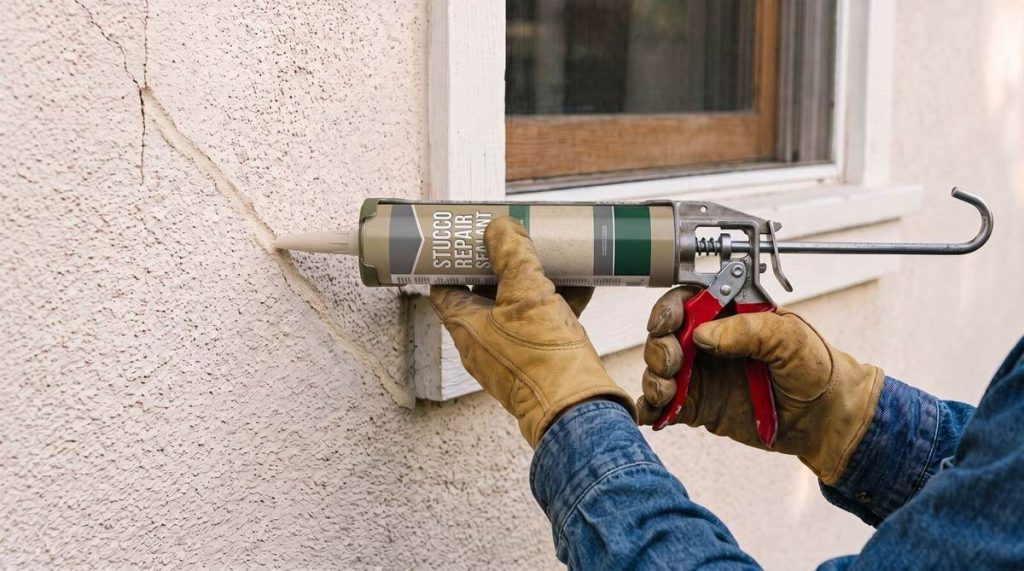
Spring storms roll through Central Texas fast, and hail is part of the package. Most people check the roof and the cars first. The walls get less attention, but stucco and especially EIFS can take real damage in a hailstorm, and some of it is easy to miss until water starts getting in.
This guide covers how to spot hail damage on stucco, what to document, and how the insurance claim process generally works in Texas. It is general information only, not legal or insurance advice. Your policy, your insurer and, if needed, a licensed professional are the right sources for decisions about your claim.
How Common Is Hail in Texas?
Texas sees a lot of it. The National Insurance Crime Bureau reported that Texas had more hail loss claims than any other state from 2016 through 2018, with more than 800,000 claims over that period. The National Weather Service treats hail one inch or larger as severe, and storms in the Hill Country and along the I 35 corridor produce hail of that size in some years.
What Hail Does to Stucco and EIFS
Hard coat stucco and EIFS react to hail differently, so it helps to know which one you have. Our post on EIFS vs stucco explains how to tell them apart.
Traditional cement stucco is hard and fairly impact resistant, but large hail and wind driven hail can still:
- Chip or pock the finish coat, leaving small craters
- Crack the surface, especially on walls that already had hairline cracks
- Knock off loose areas that were already separating from the lath
- Damage trim, foam accents and window surrounds
EIFS (synthetic stucco) has a thin finish over foam insulation board. Because the surface is softer, hail can:
- Dent the surface, leaving round dimples
- Puncture the finish and expose the foam underneath
- Open small holes that let water in behind the system
Punctured EIFS needs prompt attention because water getting behind it can cause hidden damage. See our EIFS repair service for how those repairs are handled.
How to Check Your Walls After a Storm
Once it is safe to go outside:
- Start on the side the storm came from. Wind driven hail usually hits one or two sides of the house hardest.
- Look at low angles. Stand close to the wall and look along it with the light at your back or from the side. Chips and dents show up better that way.
- Check soft spots first. Foam trim, window surrounds and EIFS accents dent more easily than the main wall.
- Look for fresh, bright marks. New chips often show lighter, unweathered material underneath.
- Check other soft targets nearby. Dented gutters, downspouts, AC fins and window screens on the same side help confirm a hail event.
- Note anything new inside. Stains or damp drywall on storm facing walls are worth recording.
Do not climb ladders or walk the roof yourself after a storm. Leave that to a professional.
What to Document
The Texas Department of Insurance encourages homeowners to file a claim as soon as they can after storm damage and to keep good records. General good practice includes:
- Photos and video of each damaged area, with something in the frame for scale, plus wider shots that show where on the house it is
- The date and time of the storm
- Notes on everyone you talk to at the insurance company, with dates
- Receipts for any temporary repairs or living expenses
- Before photos, if you have older pictures of the house, to help show the damage is new
TDI also notes that your policy may pay for reasonable temporary repairs that prevent more damage, like covering holes to keep rain out. Keep the receipts.
How the Claim Process Generally Works
Every policy and insurer is different, but the general flow looks like this:
- Read your policy. Look at your deductible, especially any separate wind and hail deductible, and any deadlines for reporting damage.
- Report the claim to your insurer or agent.
- Meet the adjuster. The insurer will usually send someone to inspect. It helps to have your photos and notes ready and to point out wall damage specifically, since walls can get overlooked next to the roof.
- Get a written estimate from a stucco contractor that describes the damage and the repair scope.
- Review the insurer’s decision and ask questions if something is missing or unclear.
If you disagree with how a claim is handled, TDI has a consumer help line and information on your options. For legal questions, talk to an attorney.
Avoid Common Storm Season Pitfalls
After a big hailstorm, out of town crews often show up. TDI’s general advice for hiring after a storm includes:
- Get more than one bid and check references.
- Do not pay in full up front, and hold the final payment until the work is done.
- Never sign a contract with blank spaces.
- Watch for anyone offering to waive or “cover” your deductible. TDI says that is illegal for homeowners deductibles under Texas law.
Repair Options for Hail Damaged Stucco
The right repair depends on how much damage there is and how it is spread across the wall:
- Scattered chips and small cracks can often be patched, textured and color matched.
- Widespread pitting across a whole elevation may be better handled with a new finish coat or color coat over the full wall, so the repair blends evenly.
- Punctured EIFS usually needs the damaged section cut out and replaced, then finished to match.
- Hidden water damage found during the repair may need lath and moisture barrier work underneath.
For crack work specifically, our guide on how to repair stucco cracks explains what separates a surface fix from a deeper one.
What Hail Repairs Typically Cost
National cost guides give these typical ranges for reference. They are national figures, not local quotes or insurance values:
- Small patch: about $200 to $600
- Hole repair: about $250 to $450 each
- EIFS repair: about $30 to $50 per square foot, or roughly $300 to $500 for a 10 square foot area
- Recoat or color coat: about $4 to $5 per square foot
Two story walls and hard to reach areas tend to push jobs toward the upper end. More detail is in our stucco repair cost guide.
How Guadalupe Stucco Co. Can Help
We can look at your walls after a storm, explain what we see and what likely caused it, and give you a free written estimate with photos that you can share with your insurer if you choose. We do not make decisions about coverage, and we will not tell you what your policy pays. Our stucco repair service covers New Braunfels and the Hill Country, including Kyle.
FAQ
Does homeowners insurance cover hail damage to stucco?
Many homeowners policies cover sudden storm damage, including hail, subject to your deductible and policy terms. Coverage varies, so check your policy or ask your agent.
How can I tell if stucco damage is from hail?
Fresh, rounded chips or dents concentrated on the side the storm came from, along with dents in gutters or screens on that side, point to hail. Older cracks spread evenly around the house usually have other causes.
Is hail damage worse on EIFS than on stucco?
EIFS has a softer surface over foam, so it tends to dent or puncture more easily than traditional cement stucco. Punctures can let water in and should be repaired promptly.
Should I wait to repair hail damage until the claim is settled?
Make temporary repairs needed to keep water out and keep your receipts. For permanent repairs, check with your insurer first so the damage can be inspected.
Storm hit your walls? Send us photos of the damaged areas, a wide shot of each side, and the date of the storm. We will tell you what we see and give you a free written estimate, with no pressure.