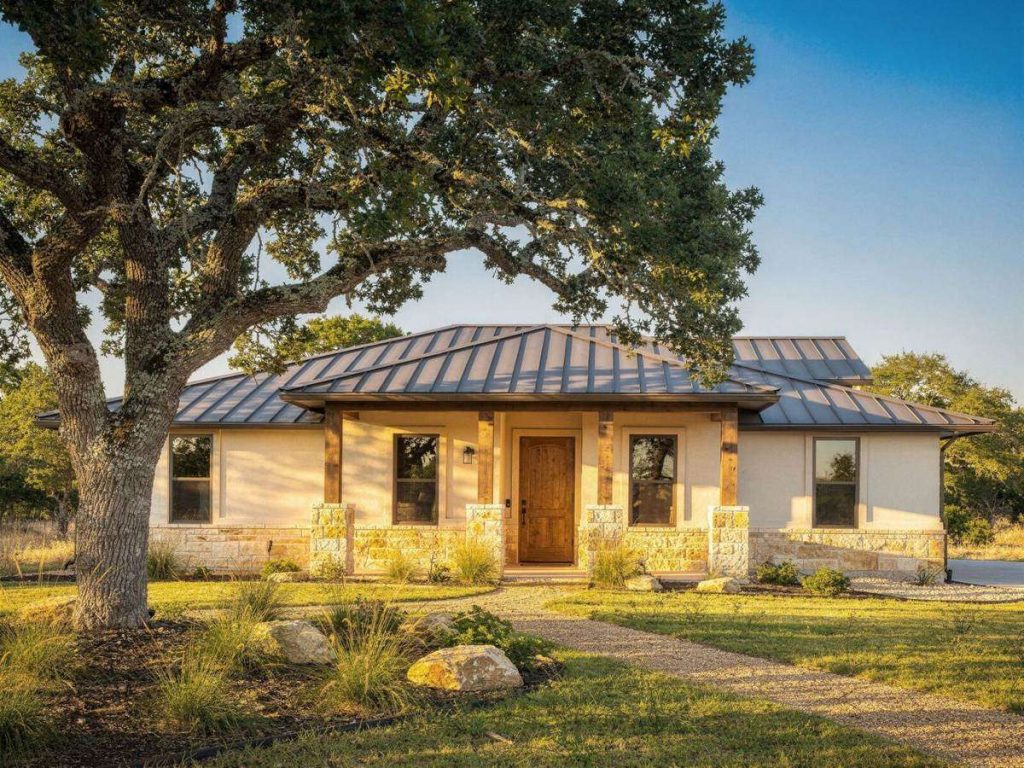
Drive through almost any newer Hill Country neighborhood and you will see the same look: limestone or stone veneer on the lower walls, columns or entry, with stucco above and around it. It is a handsome combination and it suits the landscape. It also creates one of the most common problem areas on these homes, because the line where stone stops and stucco starts is a weak point.
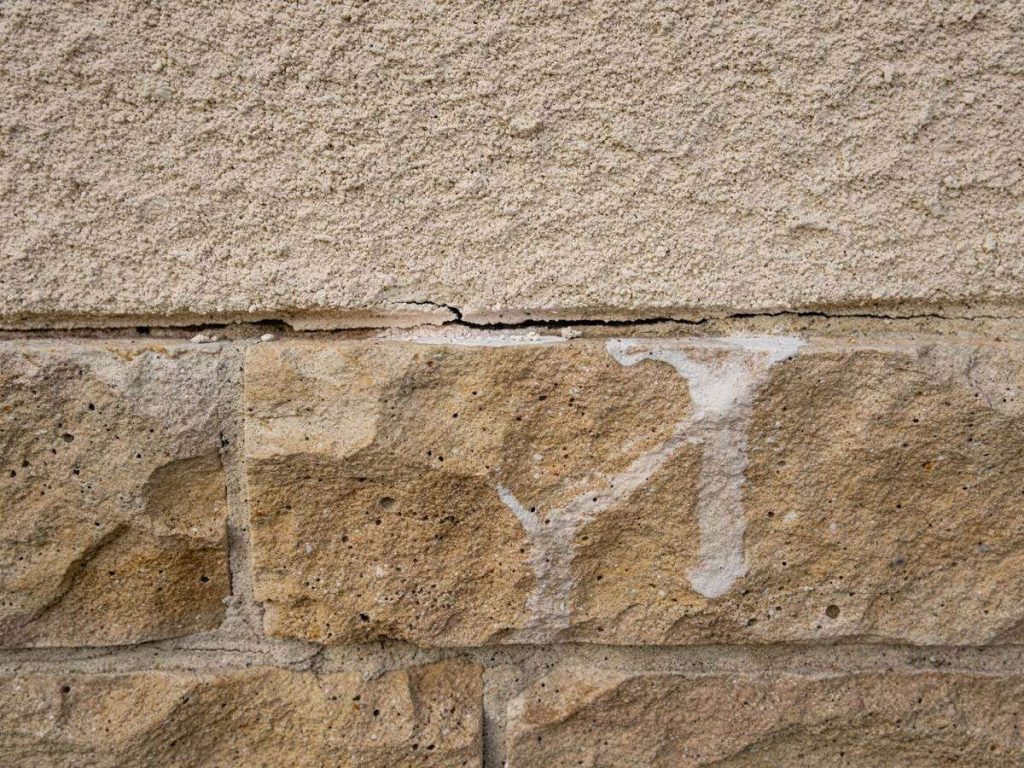
Stone and stucco are different materials that move differently, absorb water differently and are often installed by different crews on different days. When that transition is not detailed well, cracks open along it and water finds its way in. Here is where to look, what causes the trouble, and how a proper repair is approached.
The Five Trouble Spots on Stone and Stucco Homes
1. The top of a stone wainscot
When stone runs partway up a wall and stucco continues above it, the top of the stone is a ledge. Rain running down the stucco lands on that ledge. If the stone cap is flat or slopes toward the wall, water sits against the base of the stucco and soaks in. Look for cracks, stains or crumbling stucco right above the stone line.
2. Vertical joints beside stone columns and chimneys
Where a stone column or chimney butts into a stucco wall, the two materials meet in a vertical seam. If the stucco was simply troweled tight against the stone with no joint or sealant, that seam often cracks as the house goes through heat and cold cycles. The crack is often thin but runs the full height.
3. Around windows and doors set in stone
Windows framed by stone on one side and stucco on the other get two kinds of flashing and trim detail meeting in a small space. Gaps there are common water entry points.
4. Where stone meets the roof line
Stone gables, parapets or columns that rise past a roof line need flashing that ties into the roof and the stucco. Missing or short flashing, especially at the bottom of a roof slope where it meets a wall, can send water straight into the wall.
5. At grade, behind landscaping
Stone often runs down close to the ground, with stucco ending just above it. If soil, mulch or flower beds have built up over the years, the bottom of the stucco can end up buried or splashed constantly. That bottom edge is where stucco is meant to drain.
Why the Transition Fails
Several things usually stack up at a failed stone and stucco joint:
- Different movement. Stone, mortar and stucco all expand and shrink at different rates with heat and moisture. A rigid connection between them has nowhere to give.
- No proper termination. Stucco is supposed to stop at a metal or plastic edge trim (often called a casing bead or stop) with a small gap that gets sealant. When stucco is just packed against stone, the edge cracks.
- Missing flashing. The top of a stone wainscot and any stone ledge should be flashed and sloped so water runs away from the stucco.
- Blocked drainage. Traditional stucco walls are built to let water that gets behind them drain out at the bottom through a weep screed. Building codes based on the International Residential Code generally call for that weep screed to sit at least 4 inches above soil or 2 inches above paved surfaces. Stone, soil or pavers piled against it can block that path. Local code adoption varies, so a contractor should confirm what applies to your town.
- Ground movement. In parts of the I 35 corridor east of the Balcones Escarpment, soils are deep clays that shrink and swell with moisture. West of the escarpment, homes tend to sit on thin soils over limestone, where water runs off fast in heavy storms. Either way, a little movement or a lot of water shows up first at material changes.
How to Check Your Own Transitions
You can do a quick walk around without any tools:
- Look along every line where stone meets stucco for cracks, gaps or missing sealant.
- Check the top of stone wainscots for flat or back sloped caps and stains above them.
- Look for brown or dark streaks, bubbling paint or efflorescence (white, chalky salts) on the stucco near stone.
- Press gently on the stucco just above stone. It should feel solid. Soft or crumbly spots point to water.
- Check whether the bottom of the stucco is buried by soil or mulch.
- Inside, look at baseboards and drywall on walls with stone transitions for stains or swelling.
If you find stains or soft spots, read our guide to the signs of water damage behind stucco before anything gets sealed over.
How a Proper Repair Is Done
The fix depends on whether the joint is just cracked or whether water has already done damage.
For a cracked but dry joint, a contractor will typically cut the stucco back a short distance from the stone, install a proper edge trim, leave a small gap, and fill that gap with a backer rod and a flexible sealant that can be painted. That gives the two materials room to move so the repair has the best chance to hold.
For a joint that has been leaking, the stucco above the stone may need to be opened up so the lath, the moisture barrier and the framing behind it can be checked. Damaged sections get replaced, flashing is added or corrected at the stone cap, and the stucco is rebuilt and finished.
At grade, the fix may be as simple as pulling soil and mulch back and restoring clearance, or as involved as cutting back the bottom of the stucco and installing a weep screed.
Finish work matters on these repairs because the new stucco sits right next to stone that draws the eye. Our post on matching stucco texture and color covers how that blending is handled.
What These Repairs Typically Cost
National cost guides give typical ranges that help set expectations. These are national figures, not local quotes:
- Larger crack repair: about $8 to $30 per square foot
- Small localized repairs: about $60 to $120 per square foot, because setup costs are spread over a small area
- Water damage repair with new lath: about $30 to $50 per square foot, up to about $120 for severe damage
Stone transitions, two story walls and difficult access tend to push jobs toward the upper end of those ranges. Our stucco repair cost guide explains each line item.
Stone and Stucco in Older Hill Country Buildings
Towns like Fredericksburg have historic buildings in stone with stucco or plaster finishes, along with newer homes built to echo that style. Older buildings may use lime based mortars and plasters that need a softer, more compatible repair material than modern cement stucco. In Fredericksburg, properties inside the local historic district or listed as landmarks need city approval for exterior changes, so check with the city before work begins.
Let Us Look at the Transition
Guadalupe Stucco Co. starts every stone and stucco repair by finding where the water or movement is coming from, then explains what we found before you get a free written estimate. Our stucco crack repair service covers New Braunfels and the Hill Country, including homes and buildings in Fredericksburg.
FAQ
Why does stucco crack where it meets stone?
The two materials move differently with heat and moisture. When stucco is packed tight against stone with no edge trim or sealant joint, the stucco tends to crack along that line.
Can I just caulk the crack between stone and stucco?
A flexible, paintable sealant can help on a small, dry gap. If there are stains, soft spots or a crack that keeps reopening, caulk alone will not solve the cause.
Is water behind stucco above stone a serious problem?
It can be. Water trapped behind stucco can damage lath, sheathing and framing over time, often before it shows inside. It is worth checking early.
Should stone and stucco be repaired by the same contractor?
The stucco side of the joint is stucco work. If the stone, mortar or stone cap also needs repair, a mason may need to be involved, and the two trades should coordinate on flashing.
Have a crack along your stone? Send us a photo of the transition with something for scale, plus a wider shot of the wall. We will tell you what we see and whether it looks like a sealant fix or something more. Photo estimates are free, with no pressure.