Stucco Contractor for Hill Country Homes and Buildings
New stucco for additions, casitas, garden walls and commercial spaces, full restucco for tired exteriors, and clean stucco to stone transitions.
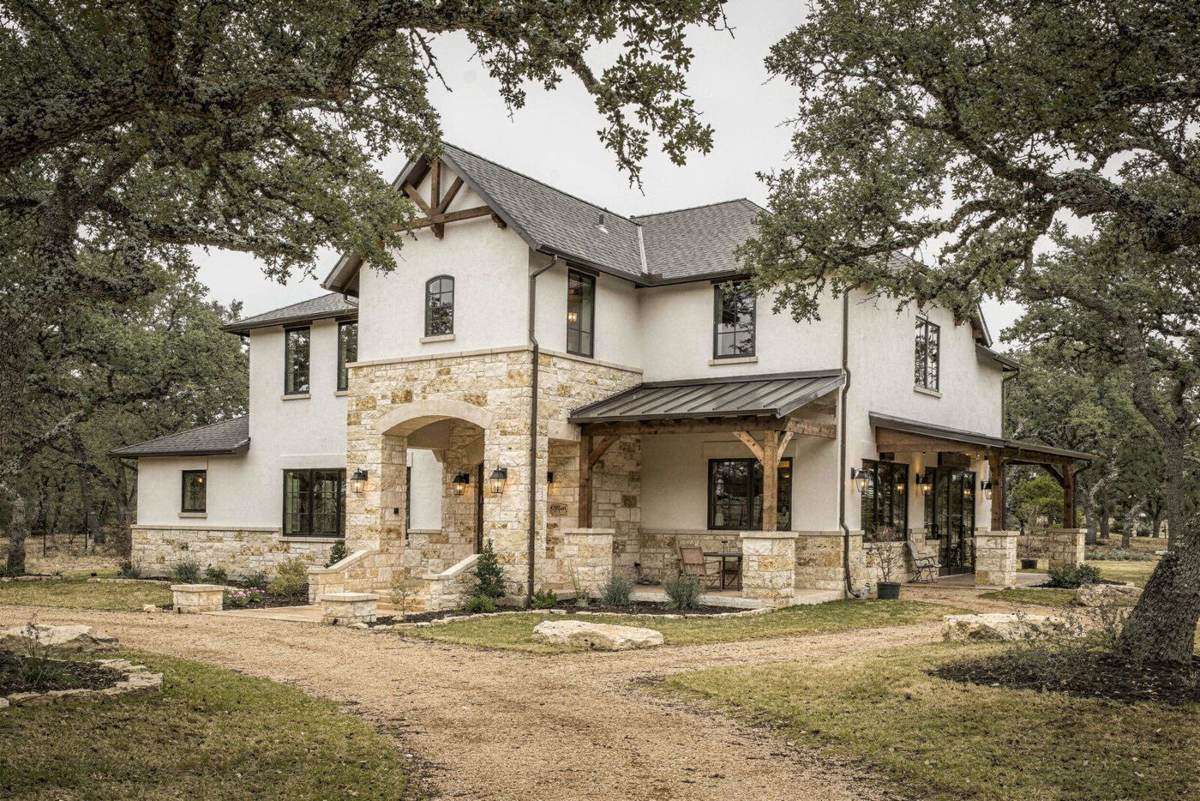
There comes a point where patching stops making sense. You are adding a room and want it to look like it was always there. You are building a courtyard wall or a casita. Or the house has been patched so many times that every wall is a different shade. That is work for a stucco contractor who builds from the paper and lath out, not just the finish coat.
Guadalupe Stucco Co. installs new stucco and restuccos existing homes and buildings across New Braunfels and the Hill Country. Every estimate starts with a walk around the property and a plain explanation of what the wall needs.
Installation Projects We Take On
- Room additions. New stucco tied into the existing house so old and new walls read as one surface.
- Casitas, garages and workshops. Detached buildings finished to match the main house.
- Garden walls, columns and caps. Stucco over block for courtyard walls, entry columns, mailbox surrounds and outdoor kitchens.
- Full restucco. Removing failed stucco and rebuilding, or adding new coats over stucco that is still sound.
- Finish updates. Swapping a dated heavy texture or a worn painted surface for a cleaner finish.
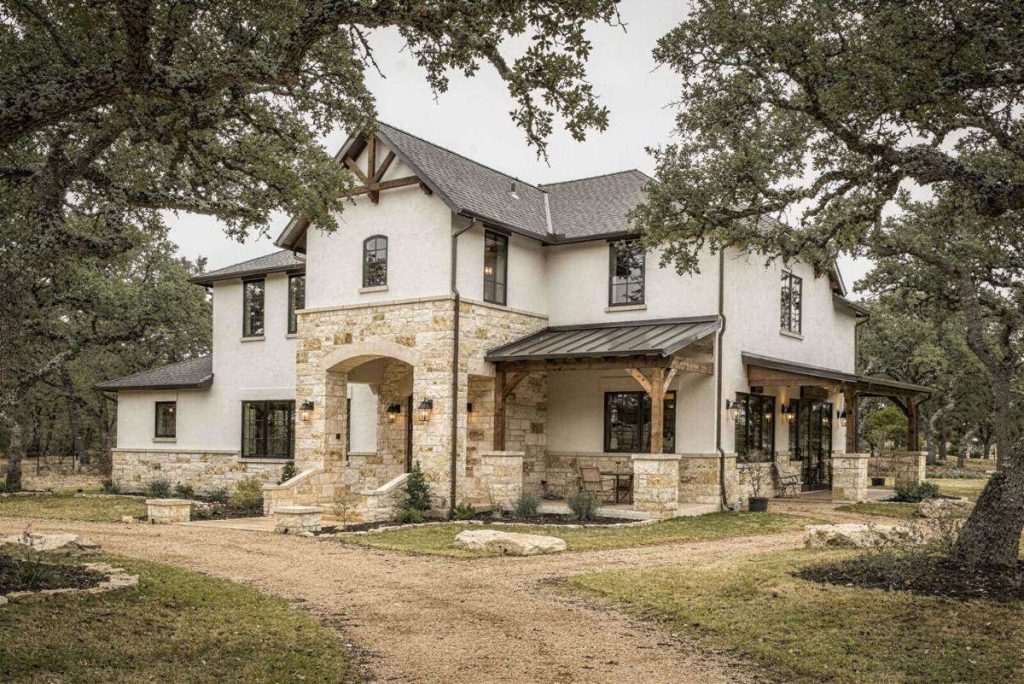
- Stucco and stone combinations. New stucco paired with limestone, rock veneer or stone wainscot, with the transition detailed to help shed water.
- Commercial buildings. Offices, retail, restaurants and multifamily properties. Read more in our commercial stucco guide.
Building Stucco and Stone Together
Limestone and stucco are a classic Hill Country pairing. You see it on custom homes outside Boerne and Dripping Springs, on ranch style places around Wimberley and Canyon Lake, and on older stone buildings in towns like Fredericksburg, which is known for its German heritage and historic stone architecture. It looks great when the two materials meet cleanly. When they do not, the seam becomes a crack and a leak.
Stone and stucco expand, contract and handle water differently. Good details at the transition matter more than any other part of the wall:
- A defined edge. A screed, casing bead or clean termination where stucco stops, rather than feathering stucco onto stone.
- Water management. Flashing and a path for water to drain out at the top of a stone wainscot or ledge so it does not collect behind the stucco.
- Sealant at the joint. A flexible sealant where the materials meet, so the seam can move a little without opening up.
- Matched planes. Planning stucco thickness so it sits correctly against the stone face instead of hanging over it.
For ideas and common trouble spots, read our article on stucco and stone exteriors.
Signs It Is Time to Restucco Instead of Repair
- Patches on most walls, and none of them match
- Cracking across large areas of the house, not just one or two spots
- Stucco that crumbles or turns to powder when you rub it
- Many hollow sounding sections on a single wall
- Staining and fading so heavy that paint no longer holds well
- Signs of moisture behind the stucco on more than one side of the house
Weighing the two? Our article on restucco cost and repair versus replace walks through the decision.
What Ages Stucco in the Hill Country
Sun and heat
Long Central Texas summers break down paint and fade color coats until walls look chalky and uneven.
Hard rain
The region is known for intense storms and flash flooding. When older stucco is full of small cracks, every heavy rain pushes a little more water behind it.
Ground movement
Clay soils along much of the I 35 corridor swell and shrink with moisture, and hillside lots farther west can settle unevenly over limestone. Over years, that movement shows up in the skin of the house.
Layers of old patches
Older homes often carry several rounds of repairs in different materials. At some point, starting fresh is cleaner than adding another patch.
How a Stucco Wall Is Built
A stucco wall is a system. Skipping or rushing a layer is a common reason walls crack or leak early.
Water resistant barrier
On wood frame walls, building paper or wrap goes over the sheathing to shed any water that gets past the stucco.
Lath and accessories
Metal lath is fastened to hold the stucco. Corner bead, control joints, casing bead at openings and weep screed at the base go on at this stage. Bare block often takes stucco directly without lath.
Scratch coat
The first coat is pressed into the lath and scored so the next coat can grip.
Brown coat
The second coat builds thickness and gets the wall flat and true.
Finish coat
The thin final coat carries the texture and, if you choose, integral color.
Some newer homes use a one coat system with fewer layers. If your building has foam board under a soft finish, it is synthetic stucco, covered on our EIFS repair page.
Curing in Central Texas Weather
Stucco does not simply dry. It cures, a chemical process that needs moisture and time. Hot sun and wind pull water out too fast and can lead to shrinkage and fine cracking. Building codes and industry standards set minimum waiting periods between coats, and we plan the schedule around them.
- Time between coats. Each base coat gets the cure time the system calls for before the next one goes on.
- Moist curing. Base coats are lightly misted during curing so they do not dry out too quickly.
- Planning around sun and storms. In summer we start early and work walls as the shade moves. In spring we watch the forecast so fresh coats are not caught by a heavy rain.
- Waiting before paint. New stucco needs time before most paints or coatings go on. We will tell you when your wall is ready.
Textures and Colors
- Smooth. A clean troweled look that shows every flaw, so it takes a practiced hand.
- Sand finish. A fine, even grain. Simple and forgiving.
- Dash and lace. Material thrown on for a textured surface, sometimes knocked down flat for a lace look.
- Santa Barbara or old world. Soft, hand troweled movement that suits Spanish, Tuscan and older Texas styles.
Choose integral color mixed into the finish, or paint or an elastomeric coating on top. Many subdivisions require architectural review for exterior colors, so check with your HOA before you commit. For palette ideas that work with limestone, see best stucco colors for the Hill Country.
Repair, Recoat or Restucco
We will not push a restucco when a repair will do the job.
- Repair fits when damage is limited and the rest of the stucco is solid. See stucco repair and stucco crack repair.
- Recoat fits when the stucco is sound but the surface is cracked, patched and faded.
- Full restucco fits when stucco is loose, wet or failing across large areas, or when the paper and lath behind it are damaged. If leaks are involved, start with stucco water damage and inspection.
What Does Restucco Cost?
National cost guides put full restucco at about $7 to $12 per square foot installed, plus roughly $1 to $3 per square foot to remove old stucco. A recoat over sound stucco typically runs about $4 to $5 per square foot. Permits for larger work can run about $150 to $2,000 depending on the jurisdiction. These are typical national ranges, not our prices. Two story walls, stone transitions, custom finishes and difficult access tend to push projects toward the upper end. See the stucco repair cost guide for more, and get a free written estimate that spells out each part of the job.
Related Services
More Stucco Services and Guides You’ll Love
Stucco Installation FAQ
Can new stucco go over old stucco?
- Often, if the old stucco is solid and well bonded. It is cleaned, treated with a bonding agent and given new coats.
- Loose or wet stucco needs to come off first.
How long does a restucco take?
- Usually a few weeks, mostly because each coat needs time to cure.
- Your estimate includes a schedule.
Can you match the house on a new addition?
- Texture can be matched by hand.
- Color is easier to match if the whole house gets a fresh coat, since older stucco fades.
Can you add stucco next to existing stone?
Yes. We detail the edge where stucco stops and flash the top of the stone so water has a way out.
Do you work on commercial buildings?
Yes. We install and repair stucco on offices, retail, restaurants and multifamily buildings and plan around business hours where we can.
More questions? Visit our FAQ.
Where We Install Stucco
We take on installation and restucco projects in New Braunfels and across the Hill Country:
- New Braunfels
- San Marcos
- Kyle
- Buda
- Boerne
- Dripping Springs
- Wimberley
- Canyon Lake
- Bulverde and Spring Branch
- Fredericksburg
See all service areas.
Plan Your Stucco Project
Prefer to talk? Call us and we will set up a time to look at the damage.